
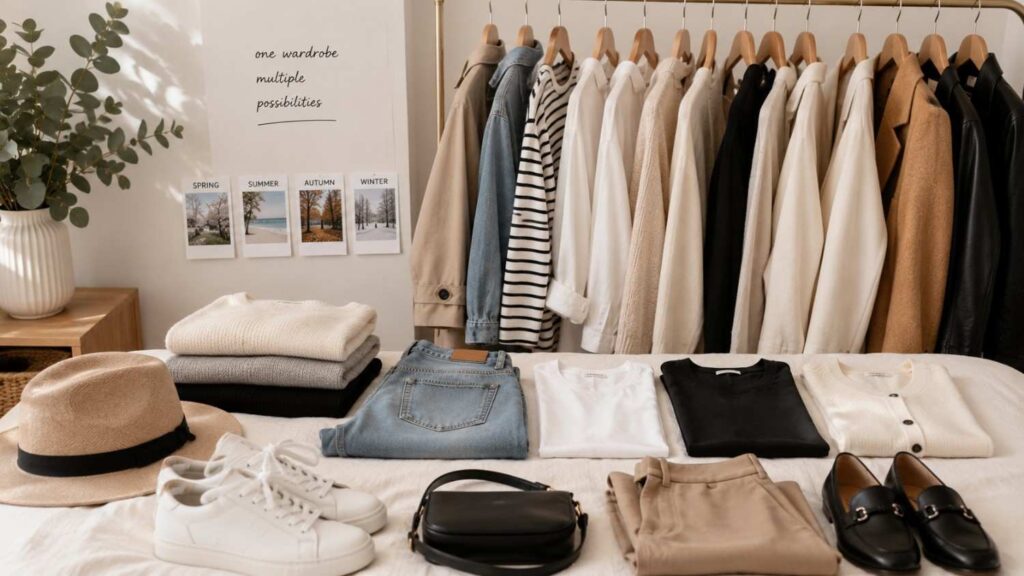
How to Build a Capsule Wardrobe for Every Season
Learning how to build a capsule wardrobe for every season can make getting dressed easier, reduce unnecessary purchases, and help you develop a clearer sense of personal style. However, a capsule wardrobe should never feel like a restrictive uniform. It should give you enough flexibility to dress for work, leisure, social events, travel, changing temperatures, and different levels of formality without filling your closet with clothes you rarely wear.
At its core, a capsule wardrobe is a carefully selected collection of garments that coordinate well and can be combined into many practical outfits. Most people benefit from keeping a stable foundation of year-round pieces and rotating a smaller number of seasonal garments as temperatures change. A simple shirt, for example, may work with linen trousers during summer, jeans and a cardigan during fall, and tailored trousers beneath a winter coat.
There is no universally correct number of items. Some minimalist challenges use a fixed limit, but your wardrobe should reflect your climate, occupation, laundry habits, cultural needs, body changes, and daily responsibilities. A parent working from home will need a different wardrobe from a corporate professional, frequent traveler, university student, or outdoor worker.
The most effective approach is therefore not to copy someone else’s list. It is to understand your own requirements, identify the clothing you genuinely enjoy wearing, and build a flexible system around those realities. The sections below explain how to create that system step by step.
Understand What a Capsule Wardrobe Should Do
Before selecting colors, counting garments, or buying new basics, it is important to define what your capsule wardrobe should accomplish. A successful wardrobe should reduce daily decision-making, provide reliable outfits for your most common activities, and allow you to express your personal style without relying on a large volume of clothing.
Many people assume that a capsule wardrobe must be extremely small, neutral, or built around a fixed list of traditional basics. In reality, those rules are optional. A useful capsule may contain bright colors, prints, dresses, modest clothing, formal workwear, sportswear, or cultural garments. What matters is that the pieces support your real life and combine effectively.
Your wardrobe should also help you manage seasonal change. A year-round capsule does not require every garment to work equally well in every temperature. Instead, it uses a reliable core that can be adjusted with lighter fabrics, warmer layers, protective outerwear, and seasonal footwear. This approach creates consistency while still respecting practical weather needs.
It is also helpful to define what success will look like. You may want to shorten your morning routine, stop making impulse purchases, improve outfit coordination, reduce closet clutter, or invest in better-quality clothing. Keeping this purpose in mind will guide later decisions about what to keep, alter, store, or purchase.
Once you understand that a capsule wardrobe is a personal organization system rather than a strict fashion rule, it becomes much easier to create one that remains useful over time.
Focus on Versatility Rather Than Minimalism
Versatility is more valuable than owning the smallest possible number of clothes. A versatile garment works in several situations, coordinates with multiple pieces, and can often be adjusted through layering or accessories. For example, a well-fitting blazer may be worn with tailored trousers for work, jeans for a casual meeting, a dress for dinner, or a simple T-shirt for travel.
When evaluating versatility, consider more than color. Fit, fabric, formality, comfort, and maintenance all affect how often an item can be worn. A delicate blouse may match several bottoms, but if it requires expensive cleaning or feels uncomfortable after an hour, it may not function as a true wardrobe essential.
It is equally important to avoid keeping garments simply because they appear on popular capsule wardrobe checklists. A white button-down shirt, beige trench coat, pencil skirt, or pair of high heels may be considered timeless, but they are only useful if they suit your lifestyle and personal preferences. If you consistently avoid wearing a particular style, it does not belong in your capsule.
The best minimalist wardrobe is therefore not necessarily the smallest. It is the one in which most items earn their place through regular use. By prioritizing versatility instead of a strict number, you create a wardrobe that feels practical rather than restrictive.
Choose Between Seasonal and Year-Round Systems
A seasonal capsule wardrobe contains the clothes you intend to wear during a specific period, such as spring or winter. At the beginning of each season, unsuitable items are stored and a smaller selection is brought into active use. This approach works well in regions with major temperature differences because it keeps the everyday closet focused and uncluttered.
A year-round capsule keeps most of the wardrobe available throughout the year. Instead of making a complete seasonal change, you rotate a limited number of weather-specific pieces, such as sandals, heavy coats, swimwear, thermal layers, or waterproof boots. This system is especially practical in mild, tropical, or unpredictable climates.
For many people, a hybrid model works best. Keep versatile tops, jeans, trousers, dresses, light jackets, and everyday shoes accessible throughout the year. Then create small seasonal kits that can be added or removed as needed. This preserves consistency while making room for climate-appropriate clothing.
Your available storage should also influence the decision. If closet space is limited, clearly labeled seasonal boxes can help. If you have enough space and frequently experience changing weather, keeping more items accessible may be easier.
Neither system is superior. The right choice depends on your climate, storage, schedule, and personal preference. The purpose is to make clothing easier to manage, not to follow a rigid method.
Audit Your Lifestyle and Existing Clothes
A successful capsule begins with observation rather than shopping. Before deciding what your wardrobe should contain, study how you currently live, what you wear repeatedly, and which garments remain untouched. This process prevents you from building a wardrobe for an imagined lifestyle instead of the one you actually have.
Begin by considering an average month rather than a single week. Some activities, such as office meetings, religious gatherings, family events, business travel, or formal dinners, may not happen every day but still require appropriate clothing. At the same time, occasional activities should not occupy more closet space than your most common routines.
Your existing wardrobe contains useful evidence. The clothes you reach for repeatedly reveal your preferred fits, colors, fabrics, and levels of formality. Unworn pieces may reveal discomfort, poor coordination, inconvenient care requirements, or purchases based on temporary trends. By studying these patterns, you can make better decisions without relying on guesswork.
An audit should also account for changing circumstances. A new job, relocation, pregnancy, health change, remote-work schedule, or shift in social activities may make your previous wardrobe less suitable. There is no value in feeling guilty about clothes that no longer serve your current life.
Take photographs, make brief notes, or use a wardrobe-tracking app if you want more detailed information. Even a simple record of what you wear for two weeks can show which pieces are dependable and which categories are missing.
This analysis creates the foundation for every later stage, including decluttering, color planning, seasonal rotation, and intentional shopping.
Identify Your Real Clothing Requirements
Start by listing the situations you regularly dress for. Common categories include office work, remote work, school, childcare, errands, exercise, religious events, social gatherings, formal occasions, travel, and outdoor activities. Then estimate how much of your month each category represents.
This percentage-based method helps you allocate wardrobe space realistically. If relaxed workwear and everyday casual clothing account for most of your schedule, those categories should receive the greatest attention. A wardrobe filled with formal dresses or business suits will not feel useful if you rarely attend formal events.
Next, consider the practical demands of each activity. Do you need clothes that allow movement, resist wrinkles, meet a professional dress code, provide modest coverage, or transition from day to evening? Do you walk frequently, commute by public transport, work in air-conditioned rooms, or spend time outdoors?
Climate must be included in the analysis. A tropical wardrobe may require breathable fabrics, sun protection, rainwear, and light layers for cold indoor spaces. A colder region may demand thermal clothing, waterproof shoes, knitwear, and insulated outerwear. Humidity, wind, and rainfall can matter as much as temperature.
Write these requirements down before you review your clothing. This prevents attractive but impractical pieces from receiving priority. Your capsule should solve daily dressing problems first and satisfy aesthetic preferences within that practical framework.
Start With the Clothes You Already Wear
Instead of emptying your closet and immediately discarding half of it, begin with the garments you already wear often. These pieces provide direct evidence of what fits your lifestyle, body, and preferences. Place your most frequently worn tops, bottoms, dresses, layers, and shoes together and look for patterns.
You may discover that you consistently choose soft fabrics, relaxed tailoring, dark bottoms, simple prints, or a specific neckline. You may also notice that your favorite outfits share similar proportions. These observations can help you define your style more accurately than copying online inspiration.
Once you identify your regular clothing, sort the remaining items into four practical groups. Keep garments that fit well and serve a clear purpose. Repair or alter useful pieces with minor problems. Store genuine off-season clothing and occasional formalwear. Release garments that are uncomfortable, badly damaged, or repeatedly ignored.
Avoid purchasing replacements immediately. Wear your reduced selection for at least two or three weeks. During this test period, record moments when you genuinely lack an appropriate item. This separates real wardrobe gaps from temporary shopping impulses.
Starting with what you own also makes the process more affordable and environmentally responsible. A capsule wardrobe should not require replacing functional clothing merely to achieve a particular visual style.
Build Your Year-Round Capsule Foundation
The year-round foundation contains the garments that remain useful across multiple seasons. These pieces create continuity, support most of your daily activities, and provide a base for seasonal layers. The goal is not to find clothing that performs perfectly in every weather condition. It is to select dependable items that can be adapted as temperatures and occasions change.
Start with the categories you wear most often. For many people, this includes everyday tops, jeans or trousers, comfortable shoes, dresses, lightweight knitwear, and one or two structured layers. Your own foundation may look different if you wear uniforms, modest clothing, traditional garments, activewear, or business attire most days.
Each foundation piece should coordinate with several others. This does not mean every item must match everything in your closet, but it should participate in enough outfits to justify the space it occupies. A useful target is at least three realistic combinations per garment.
The foundation should also reflect your preferred level of formality. If your life moves between casual and professional settings, select pieces that can be dressed up or down. A simple knit top, straight-leg trousers, clean sneakers, loafers, and a structured jacket may create several levels of polish without requiring separate wardrobes.
Comfort and fit are equally important. Clothing that pinches, slips, wrinkles badly, or requires constant adjustment is unlikely to become a dependable basic. Build around garments you can wear for several hours with confidence.
Once this core is established, seasonal additions become easier because they only need to provide weather protection, texture, or variety rather than support the entire wardrobe.
Create a Cohesive Wardrobe Color Palette
A coordinated wardrobe color palette makes it easier to create outfits without forcing you to wear only neutral shades. Begin by selecting two or three base colors for larger garments such as trousers, coats, jackets, skirts, and shoes. Popular choices include black, navy, charcoal, brown, cream, camel, olive, and denim.
Next, add two or three supporting colors that flatter your complexion and combine with the base shades. These may include soft blue, burgundy, rust, forest green, lavender, blush, or any color you enjoy wearing. Finally, choose one or two accent colors or prints that add personality.
Pay attention to undertones. Warm camel may coordinate more naturally with rust, olive, and cream, while cool charcoal may work better with blue, berry, and crisp white. You do not need professional color analysis, but observing which shades look harmonious together can reduce styling difficulty.
Prints should also connect to the palette. A patterned blouse containing two or three of your established colors will be easier to combine than a print that introduces an entirely separate color scheme.
Before keeping or purchasing an item, place it beside several existing garments. Ask whether it creates at least three complete outfits without requiring another purchase. This simple test prevents isolated pieces from entering the wardrobe and strengthens the overall coordination of your capsule.
| Color Category | Purpose in a Capsule Wardrobe | Common Examples | Works Well With |
|---|---|---|---|
| Base Colors | Form the foundation of most outfits | Black, Navy, Charcoal, Brown | Nearly all tops, jackets, and shoes |
| Supporting Colors | Add variety without reducing versatility | Olive, Cream, Camel, Soft Blue | Base colors and seasonal layers |
| Accent Colors | Express personal style through limited pops of color | Burgundy, Mustard, Emerald, Coral | Neutral basics and simple accessories |
| Prints & Patterns | Add visual interest while staying wearable | Stripes, Small Florals, Checks | Solid-colored clothing in the same palette |
Select Your Core Capsule Wardrobe Essentials
Capsule wardrobe essentials should be selected according to your routine rather than copied from a universal list. However, a balanced foundation usually includes everyday tops, practical bottoms, one-piece outfits, layering pieces, suitable outerwear, comfortable footwear, and a small collection of accessories.
The table below offers a flexible starting range:
| Category | Suggested Foundation | Seasonal Adjustment |
|---|---|---|
| Everyday tops | 6–10 | Add sleeveless, breathable, or thermal options |
| Bottoms | 4–6 | Rotate shorts, linen, wool, denim, or corduroy |
| Dresses or one-piece outfits | 2–4 | Change fabric weight and layering |
| Knitwear and mid-layers | 3–5 | Use lighter or heavier weights |
| Jackets | 2–3 | Add rainwear or insulated outerwear |
| Everyday shoes | 3–5 pairs | Rotate sandals, boots, or waterproof shoes |
| Bags and accessories | 3–6 | Add weather-specific accessories |
These numbers are guidelines, not rules. Someone who does laundry once a week may need more tops than someone who washes clothes frequently. A person who wears dresses daily may need fewer trousers, while someone with a strict office dress code may need additional structured pieces.
Underwear, sleepwear, specialist sportswear, uniforms, and sentimental items are usually managed separately. Keeping these categories outside the main count prevents the capsule from becoming unnecessarily restrictive.
Prioritize Fit, Fabric, and Care
A garment can coordinate perfectly and still fail as a capsule piece if it is uncomfortable, unsuitable for the climate, or difficult to maintain. Fit should therefore be assessed while standing, sitting, walking, reaching, and wearing the item for an extended period. Clothing that requires constant adjustment rarely becomes a favorite.
Fabric should match both weather and purpose. Cotton, linen, and breathable blends may work well in warm conditions, while wool, fleece, and insulated materials support colder climates. Fabrics with some structure may be suitable for professional settings, whereas softer materials may provide better comfort for travel or childcare.
Consider durability as well. Examine seams, fastenings, fabric density, stretch recovery, pilling, and transparency. Quality does not always depend on price or brand, but the garment should withstand the frequency with which you expect to wear it.
Care requirements must fit your routine. If you do not have time for hand washing, ironing, or frequent dry cleaning, avoid building your capsule around high-maintenance pieces. Read care labels before purchasing and consider whether the fabric will remain attractive after repeated use.
A smaller wardrobe naturally places more demand on each garment. Choosing appropriate fit, fabric, and care requirements helps those pieces maintain their shape, comfort, and appearance over time.
Adapt the Capsule for Spring and Summer
Spring and summer require thoughtful adjustments because rising temperatures, rain, humidity, strong sunlight, and air-conditioned indoor spaces can create very different clothing needs. Instead of replacing your year-round wardrobe, add a limited number of lightweight pieces that improve comfort while continuing to coordinate with your existing foundation.
Spring often involves unpredictable temperature changes. Mornings may feel cool, afternoons warm, and rain can appear unexpectedly. Lightweight layers are therefore more useful than heavy seasonal garments. Summer usually demands breathable fabrics, comfortable footwear, sun protection, and clothes that can be washed frequently.
When selecting warm-weather items, focus on fabric weight, airflow, opacity, and ease of care. A garment may look appropriate for summer but feel uncomfortable if the fabric traps heat or requires complicated maintenance. Loose silhouettes, natural fibers, moisture-friendly blends, and lighter colors may improve comfort, although personal preference and climate should guide the final choice.
Warm-weather clothing should also connect to the rest of the wardrobe. A sleeveless blouse can work alone during summer and beneath a cardigan or blazer during spring and fall. Lightweight trousers can be paired with sandals in hot weather and closed shoes during transitional months.
Avoid treating every warm season as a reason to shop. Begin by reviewing what you already own, identify the specific conditions your current wardrobe cannot manage, and add only the pieces that solve those problems.
This approach keeps the seasonal capsule functional, coordinated, and easier to store when temperatures change.
| Season | Keep from Year-Round Capsule | Add for the Season | Store or Rotate Out |
|---|---|---|---|
| Spring | Basic tops, jeans, sneakers | Lightweight cardigan, rain jacket | Heavy winter coats |
| Summer | T-shirts, lightweight trousers, dresses | Sandals, swimwear, breathable fabrics | Thick knitwear and insulated boots |
| Fall | Jeans, shirts, versatile jackets | Sweaters, ankle boots, scarves | Most summer-only clothing |
| Winter | Core tops, trousers, everyday basics | Thermal layers, insulated coat, gloves, waterproof boots | Sandals and lightweight summer pieces |
Build a Flexible Spring Capsule Wardrobe
A spring capsule wardrobe should help you manage changing temperatures without carrying several completely different outfits. Transitional clothing is especially valuable during this season because it can be added or removed throughout the day.
Begin with your year-round tops, jeans, trousers, dresses, and comfortable shoes. Add a lightweight jacket, cardigan, rain-resistant layer, and one or two breathable knitwear pieces. Depending on your climate, you may also need a compact umbrella, water-resistant bag, or closed shoes that can handle wet conditions.
Useful spring outfit formulas include a T-shirt with trousers and a cardigan, a dress with a light jacket and sneakers, a shirt with jeans and loafers, or fine knitwear with a midi skirt. These combinations are easy to adjust without requiring an entirely separate wardrobe.
Spring is also a good time to introduce color and texture. Instead of purchasing many new garments, use a scarf, lightweight bag, patterned blouse, or one seasonal accent shade to refresh familiar basics. Pastels are popular, but they are not compulsory. Choose colors that coordinate with your established palette.
Before adding a spring piece, check whether it can also work during early fall or cool summer evenings. Cross-season usefulness increases cost per wear and reduces the amount of clothing that must be stored.
Simplify Your Summer Capsule Wardrobe
A summer capsule wardrobe should prioritize comfort, breathability, and easy maintenance. In hot or humid climates, clothes may need to be washed more frequently, so fabrics should tolerate regular laundering and dry efficiently.
A practical summer kit may include several lightweight tops, two or three breathable bottoms, one or two dresses, comfortable sandals, swimwear where relevant, and sun-protective accessories. Lightweight overshirts, cardigans, or scarves may still be necessary for air-conditioned offices, restaurants, and public transport.
Pay attention to opacity and undergarment compatibility when selecting light fabrics. A garment that requires special underlayers or constant adjustment may be less versatile than it initially appears. Loose-fitting linen, cotton, or breathable blends often provide airflow, but wrinkle tolerance and care requirements should also be considered.
Choose pieces that support several settings. A simple dress may work for errands with flat sandals, for work with a lightweight blazer, and for dinner with different accessories. Similarly, a breathable shirt can be worn open over a tank top, tucked into trousers, or layered later in the year.
Avoid buying too many highly specific holiday clothes. Before purchasing, ask whether the item can be worn at home, styled for several occasions, or layered during another season. The most useful summer capsule remains practical beyond one trip.
Adapt the Capsule for Fall and Winter
Fall and winter wardrobes usually require more layers, heavier fabrics, weather protection, and practical footwear. However, this does not mean every warm-weather garment must be removed. Many lightweight pieces can continue working as base layers beneath knitwear, jackets, and coats.
Fall is particularly suitable for transitional dressing. Summer dresses can be paired with cardigans and boots, lightweight shirts can sit beneath sweaters, and skirts can be worn with tights or closed shoes. Winter requires more specialized protection, but the same year-round tops and trousers may still serve as part of a layered outfit.
Begin by assessing the actual weather conditions in your location. Temperature alone does not determine clothing needs. Wind, rain, snow, humidity, indoor heating, commuting methods, and time spent outdoors all influence what you should wear. Someone who drives directly to an office may require less outerwear than someone who walks or uses public transport.
Quality becomes especially important for cold-weather clothing because coats, boots, and knitwear are worn frequently and may represent a larger investment. Select items that fit over your existing layers, provide appropriate protection, and coordinate with several outfits.
Accessories can add warmth without requiring additional clothing categories. Scarves, gloves, hats, thermal socks, and removable liners can extend the usefulness of existing outerwear.
By building fall and winter additions around your year-round foundation, you reduce duplication and create a wardrobe that remains visually consistent across the colder months.
Create a Transitional Fall Capsule Wardrobe
A fall capsule wardrobe should bridge the gap between warm and cold weather. The most useful pieces are medium-weight layers that can be worn alone on mild days and combined with heavier outerwear as temperatures drop.
Start with garments from your summer and year-round foundation. Pair dresses with cardigans, wear lightweight shirts beneath knitwear, and combine skirts with ankle boots or loafers. Add a medium-weight jacket, textured sweater, water-resistant layer, scarf, and weather-appropriate bag.
Texture can make familiar outfits feel seasonal without requiring a large number of new garments. Corduroy, denim, leather, suede, wool blends, and heavier knits introduce visual depth while remaining easy to coordinate. Choose textures that fit your climate and care routine.
Color can also create a fall mood. Rust, burgundy, olive, camel, deep blue, and chocolate brown are traditional choices, but your capsule does not need a separate autumn palette. Use deeper versions of colors already present in your wardrobe.
Pay particular attention to outerwear fit. A jacket should close comfortably over a sweater without restricting movement. Shoes should remain comfortable with thicker socks and provide enough protection for rain or cooler conditions.
Fall is an ideal time to test layering combinations before winter arrives. Photograph successful outfits so that you can repeat them quickly when the weather becomes unpredictable.
Add Practical Winter Capsule Wardrobe Layers
A winter capsule wardrobe should be built around functional layering. Rather than relying on one extremely heavy garment for every situation, use several layers that can be adjusted according to temperature and activity.
The first layer should sit comfortably against the body and help manage warmth. Depending on your climate, this may be a regular cotton top, merino base layer, or thermal garment. The middle layer provides insulation through knitwear, fleece, or another warm fabric. The outer layer protects against wind, rain, or snow.
Choose coats that fit over your normal winter combinations. A coat that feels comfortable only over a thin shirt will limit your options. Weather-resistant shoes should also provide traction, insulation, and enough room for suitable socks.
Your seasonal kit may include one dependable everyday coat, a more formal or activity-specific alternative, warm knitwear, thermal layers, boots, gloves, a hat, scarves, and weather-appropriate socks. However, the exact number should reflect your climate and routine.
Do not reduce winter clothing to meet an arbitrary capsule limit if doing so affects safety or comfort. Someone living in severe cold may genuinely need more specialized gear than someone in a mild climate.
The goal is to create a compact but complete system that keeps you warm while allowing your year-round foundation pieces to remain useful.
Plan Outfits and Shop More Intentionally
A capsule wardrobe is not complete simply because the closet looks tidy. It must also produce enough practical outfits for work, errands, travel, social events, and seasonal weather. Outfit planning helps you test whether the wardrobe is truly functional before you spend money on additional clothing.
Many people believe they need more garments when the real problem is that they have not explored enough combinations. Photographing outfits, creating formulas, or trying on complete looks can reveal possibilities that are difficult to see when clothes remain separated on hangers.
Intentional shopping begins only after this testing process. Instead of browsing without direction, identify a clear wardrobe gap and define what would solve it. Specify the category, fit, color, fabric, level of formality, and budget before you shop. This makes it easier to reject attractive items that do not serve the intended purpose.
It is also useful to distinguish between replacement purchases and expansion purchases. A replacement restores a function already present in the wardrobe, such as replacing worn-out black trousers. An expansion adds a new function, such as purchasing waterproof boots after moving to a wetter climate. Both can be reasonable, but they should be deliberate.
Shopping intentionally does not require buying only expensive clothing. Secondhand stores, clothing swaps, alterations, repairs, rental services, and affordable retailers can all support a capsule when used thoughtfully.
The purpose is to reduce reactive purchases and make each new item strengthen the wardrobe as a whole.
Create Repeatable Outfit Formulas
An outfit formula is a simple structure that can be repeated using different garments. Instead of planning every outfit from the beginning, you rely on combinations that already suit your body, schedule, and preferred level of formality.
Examples include a fitted top with wide-leg trousers and a structured layer, a shirt with straight-leg jeans and loafers, a dress with a cardigan and ankle boots, or knitwear with tailored trousers and a coat. The exact formula matters less than its usefulness.
Begin by trying on your favorite garments together. Adjust proportions through tucking, rolling sleeves, changing footwear, or adding a belt. Photograph the combinations that feel comfortable and appropriate. Save these images in a dedicated phone album so you can consult them during busy mornings or while packing for travel.
Aim to create at least seven dependable everyday outfits and several situation-specific options. Include one outfit for unexpected professional meetings, one for a social event, and one for difficult weather if those situations apply to your life.
Repeatable formulas also make seasonal transitions easier. The same shirt-and-trouser combination can be worn with sandals in summer, loafers and a cardigan in fall, or boots and a coat in winter.
Outfit planning reveals whether you have a genuine wardrobe gap or simply need better styling ideas.
Use a Written Gap List and Three-Outfit Test
A written gap list transforms shopping from entertainment into problem-solving. Whenever you notice a missing function, record the exact requirement rather than immediately purchasing the first available option.
For example, instead of writing “need a jacket,” specify “lightweight water-resistant navy jacket that fits over knitwear and works for commuting.” Include your preferred fabric, fit, maximum budget, and any practical requirements such as pockets or machine washing.
Before buying, apply the three-outfit test. The item should create at least three complete outfits using clothes you already own. For expensive, formal, or highly visible pieces, aim for five or more combinations. This test prevents isolated garments from entering the wardrobe.
Also consider whether an existing piece could be repaired, altered, dyed, or styled differently. A tailor may improve the fit of trousers for less than the cost of replacing them. A new button, shortened hem, or repaired zipper can return an overlooked garment to regular use.
Secondhand shopping and clothing swaps are useful when you already know what you need. Without a clear list, low prices can encourage unnecessary purchases.
Keep the gap list for several weeks before acting. If the need continues to appear across different outfits and situations, the purchase is more likely to be worthwhile.
Avoid Common Capsule Wardrobe Mistakes
One of the most common mistakes is purchasing an entirely new “capsule wardrobe” before understanding what already works. This can create a smaller closet without solving problems related to fit, comfort, lifestyle, or personal style.
Another mistake is choosing a neutral color palette because it appears sophisticated online, even though you prefer bright colors or prints. A wardrobe that does not reflect your personality may feel boring and eventually lead to more shopping.
Rigid item limits can also cause problems. Reducing the wardrobe too aggressively may leave you without enough clothes between laundry days or without suitable options for work, weather, and social events. Numbers should guide organization rather than control it.
People also keep uncomfortable clothing because it looks timeless or was expensive. Cost and appearance do not make a garment useful if you avoid wearing it. Similarly, clothes purchased for an aspirational lifestyle often remain untouched.
Ignoring climate is another major error. A beautiful capsule that lacks rain protection, breathable fabrics, or adequate winter layers is not functional.
Treat your first capsule as a working draft. Wear it, observe it, and adjust it gradually. The goal is not to achieve a perfect closet in one weekend. It is to develop a reliable wardrobe system based on repeated experience.
Maintain and Refresh Your Wardrobe Responsibly
A capsule wardrobe is not a one-time decluttering project. It is an ongoing system that requires care, review, repair, and occasional adjustment. Because each piece is worn more frequently, proper maintenance becomes especially important.
Begin by following care labels and learning how different fabrics should be washed, dried, stored, and pressed. Washing garments more aggressively than necessary can shorten their lifespan, fade colors, distort shapes, and damage fibers. At the same time, leaving stains or small repairs untreated can turn manageable problems into permanent damage.
Seasonal storage should also be intentional. Clothes should be clean and completely dry before being placed in storage. Use breathable containers when appropriate, avoid overcrowding, and protect garments from moisture, insects, and direct sunlight. Label containers clearly so that you know what is available before shopping for the next season.
Regular reviews help the wardrobe evolve with your needs. Your job, body, climate, responsibilities, and preferences may change over time. A capsule should adapt rather than becoming another restrictive system.
Responsible maintenance also includes making thoughtful decisions about clothing you no longer use. Selling, donating, swapping, repurposing, or recycling may be appropriate depending on the item’s condition and local facilities. However, donation should not be used as an excuse for repeated overbuying.
A well-maintained wardrobe saves money, reduces frustration, and helps useful garments remain in circulation for longer.
Care for and Store Clothing Correctly
Correct clothing care begins with understanding the garment rather than automatically using the same wash cycle for everything. Read care labels, separate colors when necessary, close zippers, empty pockets, and use mesh bags for delicate items. Washing at an appropriate temperature and avoiding excessive detergent can help preserve fabric quality.
Treat stains promptly according to the fabric type. Rubbing too aggressively may spread the stain or damage fibers, so test cleaning products on a hidden area first. Small repairs such as loose buttons, open seams, or minor hems should be completed before the damage becomes worse.
Storage methods also matter. Knitwear is often better folded because hanging can stretch the shoulders. Structured jackets may require supportive hangers, while delicate garments should not be compressed beneath heavy items. Shoes should be cleaned and dried before storage, and leather may need conditioning.
Before placing seasonal clothing away, wash or professionally clean it. Food residue, body oils, and untreated stains can attract pests or become difficult to remove over time. Use labeled, breathable storage and avoid damp areas.
Extending clothing life has practical and environmental value. When garments remain wearable for longer, you replace them less frequently and reduce the demand for new purchases.
A smaller wardrobe makes maintenance easier because you can identify problems quickly and give each item appropriate attention.
Complete a Short Seasonal Review
A seasonal review allows you to improve the wardrobe using real experience. Complete it when the weather changes or at the end of each major season. The process does not need to take an entire day; a focused review can often be completed in less than an hour.
Begin by identifying the garments you wore repeatedly. Note why they worked. Was the fit comfortable, the fabric practical, the color easy to combine, or the level of formality suitable for several activities?
Next, examine what remained unworn. An unused item is not automatically a mistake. It may belong to a specific occasion that did not occur. However, repeated non-use often indicates poor fit, discomfort, limited coordination, or changing preferences.
Check for repairs, stains, worn soles, missing buttons, and fabric damage. Complete maintenance before storing the item so that it will be ready when needed again.
Review any clothing gaps you recorded during the season. Determine whether each gap can be solved through styling, alteration, borrowing, or a genuine purchase. Remove duplicate requests from the list.
Finally, store off-season pieces together and record what the container includes. This prevents forgotten items and duplicate shopping.
Over time, seasonal reviews become faster because your capsule grows more accurate and requires fewer changes.
Quick Answer About How to Build a Capsule Wardrobe for Every Season
To build a capsule wardrobe for every season, begin by identifying the clothes you already wear most often and the activities that shape your weekly routine. Choose a coordinated color palette, create a year-round foundation of versatile tops, bottoms, dresses, shoes, and lightweight layers, and then add a smaller group of weather-specific items for spring, summer, fall, and winter.
Every garment should fit your current body, support your lifestyle, and combine with several other pieces. Instead of replacing your entire wardrobe, rotate seasonal items such as sandals, raincoats, heavy knitwear, or insulated outerwear as the weather changes. Review your capsule at the start of each season, repair useful pieces, remove items that no longer serve you, and shop only when you identify a genuine wardrobe gap. The goal is not to own as little as possible. It is to make everyday dressing simpler, more reliable, and more personal.
Frequently Asked Questions
Building a capsule wardrobe often raises practical questions about clothing quantities, seasonal rotation, color choices, footwear, and budget. The answers depend on lifestyle, climate, storage, and personal preference, so universal rules should be treated with caution.
The purpose of a capsule is to make your wardrobe more functional, not to create anxiety around counting items. Some people feel comfortable with a very small collection, while others need additional clothing because of laundry schedules, professional requirements, caregiving duties, cultural expectations, or dramatic weather changes.
It is also important to recognize that a capsule wardrobe can contain personality. Bright colors, prints, statement accessories, and distinctive silhouettes can all be included when they coordinate with the wider collection. Neutral basics are helpful for many people, but they are not a requirement.
Seasonal rotation can be equally flexible. You may replace a significant portion of your wardrobe every three months, or you may keep most pieces available and change only shoes, outerwear, and fabric weight. The right system is the one you can maintain consistently.
The following answers address the most common questions beginners ask when learning how to build a capsule wardrobe for every season. Use them as practical guidance rather than strict rules. Your wardrobe should ultimately respond to your own routine, environment, body, and style preferences.
How many clothes should be in a capsule wardrobe?
There is no compulsory number of garments for a capsule wardrobe. Some people use 25 to 40 items for one season, while minimalist challenges may suggest a specific limit. However, these numbers are planning tools rather than universal standards.
Your ideal quantity depends on several factors, including climate, laundry frequency, occupation, activities, storage space, and whether shoes, bags, and outerwear are counted. Someone who does laundry once a week may require more everyday tops than someone who washes clothes every few days. A professional dress code may also require additional formal pieces.
Begin with enough clothing to cover your normal schedule comfortably. Test the collection for several weeks and remove only the items that remain consistently unused. Do not reduce the wardrobe so aggressively that you create unnecessary laundry pressure or lack suitable clothing for important activities.
A functional capsule may be larger than an online example and still achieve its purpose. The correct number is the smallest collection that reliably supports your real life without making dressing more difficult.
Can one capsule wardrobe work throughout the year?
Yes, one capsule wardrobe can work throughout the year when it is built around versatile foundation pieces and supported by smaller seasonal additions. Tops, jeans, tailored trousers, simple dresses, lightweight knitwear, and certain shoes may remain useful in several seasons.
Weather-specific items can then be rotated. Summer may require sandals, swimwear, and breathable fabrics, while winter may require insulated coats, boots, thermals, and heavier knitwear. Spring and fall often use transitional pieces such as cardigans, rain jackets, and medium-weight layers.
The amount of rotation depends on climate. In a mild region, most garments may remain accessible throughout the year. In a location with extreme heat and cold, separate seasonal storage will probably be more practical.
The key is to maintain a consistent color palette and compatible silhouettes across the wardrobe. This allows seasonal pieces to combine with the same year-round foundation.
A year-round capsule does not require every garment to work in every temperature. It requires the wardrobe as a whole to remain coordinated as weather-specific items are added or removed.
What colors are best for a capsule wardrobe?
The best colors are those you enjoy wearing, that suit your lifestyle, and that combine easily. Begin with two or three base colors for larger items such as trousers, outerwear, bags, and shoes. Black, navy, brown, charcoal, cream, camel, olive, and denim are common choices because they coordinate widely.
Next, add supporting colors that flatter you and reflect your personality. These might include blue, green, burgundy, blush, rust, lavender, or brighter shades. Accent colors and prints can then provide variety.
Neutral colors are convenient but not compulsory. A colorful capsule can be highly functional when the shades share compatible undertones and appear across several garments. For example, a patterned blouse containing navy, cream, and burgundy can coordinate with multiple bottoms and layers.
When evaluating a color, consider whether it works with at least three garments you already own. Also think about your maintenance preferences, since very light or delicate shades may require more frequent cleaning.
A capsule wardrobe should feel visually coherent, but it should still represent your personal style.
Do shoes count in a capsule wardrobe?
Shoes can be counted as part of a capsule wardrobe, but including them is optional. People participating in a strict minimalist challenge may count footwear, bags, and outerwear. Others prefer to count only everyday clothing and manage specialist categories separately.
The best approach is to include shoes when doing so helps you control clutter or identify duplication. A practical footwear capsule may include everyday sneakers, a polished work option, weather-resistant shoes, a seasonal pair, and one formal choice.
Specialist footwear should usually be evaluated separately. Running shoes, safety boots, hiking footwear, medical shoes, or shoes required for a specific profession serve distinct functions and should not be removed merely to meet a number.
Climate also affects footwear needs. Someone living in a rainy or snowy region may genuinely require more protective options than someone in a dry, mild location.
Whether you count shoes or not, each pair should fit comfortably, support the activities for which it is intended, and coordinate with several outfits. The objective is to reduce unnecessary duplication without compromising comfort, safety, or practicality.
How can I build a capsule wardrobe on a budget?
The most affordable way to build a capsule wardrobe is to begin with the clothes you already own. Identify your most-worn garments, create outfits from them, and test the reduced selection before purchasing anything new.
Use a written gap list to separate genuine needs from impulse purchases. Specify the category, color, fit, fabric, and maximum price. Then apply the three-outfit test to every potential purchase. If the item does not work with at least three existing outfits, it may create more problems than it solves.
Repairs and alterations can also provide excellent value. Replacing buttons, shortening a hem, adjusting a waistband, or repairing a zipper may return an unused garment to regular rotation. Secondhand stores, resale platforms, clothing swaps, and outlet sales can help fill specific gaps at a lower cost.
Avoid buying many inexpensive items simply because they are affordable. Cost per wear matters more than the initial price. A slightly more expensive garment worn weekly may offer better value than several cheaper pieces that remain unused.
Build the wardrobe gradually. A functional capsule develops through observation and careful replacement, not one large shopping trip.
How often should I update a seasonal capsule wardrobe?
A seasonal capsule should be reviewed approximately every three months or whenever local weather changes significantly. However, an update does not automatically mean purchasing new clothing.
During the review, identify which garments you wore regularly, which remained unused, and which need repair or cleaning. Rotate weather-specific pieces, check the fit of stored clothing, and review any wardrobe gaps recorded during the previous season.
Your schedule may also require an update when your circumstances change. A new job, relocation, pregnancy, health change, weight fluctuation, travel requirement, or shift between office and remote work may affect what your wardrobe needs to provide.
Avoid replacing garments simply because they are no longer fashionable. If an item still fits, feels comfortable, and works with your outfits, it can remain in the capsule.
A short review at the beginning and end of each season is usually enough. The longer you use the system, the fewer changes should be necessary because you will understand your preferences more accurately.
A capsule wardrobe should evolve gradually rather than being rebuilt several times a year.
Can a capsule wardrobe include prints and bright colors?
Yes, a capsule wardrobe can include prints, bright colors, and statement pieces. The goal is coordination, not visual uniformity. A wardrobe that removes everything you enjoy wearing may look organized but will not feel personal or sustainable.
Choose prints that include colors already present in your palette. A patterned dress containing navy, cream, and green, for example, may work with a navy blazer, cream cardigan, green scarf, and several pairs of shoes. This makes the print more versatile.
Bright colors can be used as supporting or accent shades. You may choose one bold jacket, several colorful tops, or statement accessories. The right balance depends on how often you enjoy wearing color.
Consider the scale and formality of a print as well. Small patterns may layer easily, while large or distinctive prints may function as focal pieces. Both can belong in a capsule when they create several realistic outfits.
Do not build a neutral wardrobe simply because it appears more minimalist. A successful capsule should simplify dressing while preserving the colors, patterns, and silhouettes that make you feel confident.
Conclusion
Learning how to build a capsule wardrobe for every season begins with understanding your real lifestyle rather than following a universal shopping list. The most useful wardrobe is one that supports your work, climate, social activities, comfort requirements, and personal style with as little unnecessary duplication as possible.
Start by auditing what you already own and identifying the garments you wear repeatedly. These pieces reveal your preferred fits, colors, fabrics, and outfit proportions. Use them to create a coordinated year-round foundation, then add compact seasonal kits for changing weather.
A practical capsule should contain versatile garments that create several outfits, fit comfortably, and match your normal care routine. Outfit formulas, photographs, written gap lists, and the three-outfit test can help you use the wardrobe more effectively and avoid impulse purchases.
Seasonal reviews are equally important. Repair useful pieces, store clothing correctly, and adjust the capsule when your lifestyle changes. Do not remove garments merely to achieve an arbitrary number, and do not purchase a completely new minimalist wardrobe before testing what you already own.
Over time, your capsule should become easier to maintain because every piece has a clear role. The result is not only a more organized closet but also a more confident and intentional approach to dressing.