
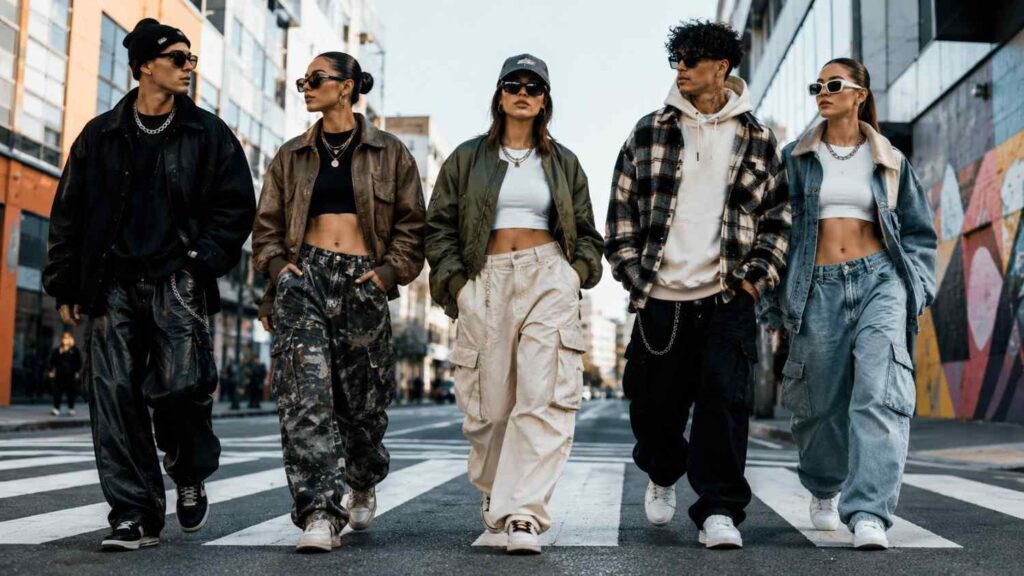
Top 5 Street Style Trends for 2026 and How to Wear Them
The Top 5 Street Style Trends for 2026 reveal a fashion landscape shaped by personal expression rather than a single dominant uniform. Across major fashion cities, showgoers are wearing practical wardrobe pieces while experimenting with proportions, color combinations, scarves, tactile surfaces, and accessories that make their outfits feel individual. This balance between wearability and creativity is important because it allows runway ideas to influence everyday clothing without requiring people to dress as though they are attending a fashion show.
The strongest 2026 outfit ideas are often built around familiar foundations. A white T-shirt, tailored coat, straight skirt, simple dress, or neutral trouser may form the base of the outfit. Interest is then introduced through one purposeful choice: an oversized scarf, a curved trouser leg, a bright color, a leopard-print coat, or an expressive belt. This approach is both practical and visually effective because it prevents multiple statement pieces from competing for attention.
Current fashion coverage supports this movement toward personality-led dressing. Spring 2026 reporting has highlighted balloon pants, bold color, playful prints, and expressive accessories. Fall street-style analysis has documented minimalist tonal outfits, scarf draping, belts worn creatively, leopard print, and shaggy textures. Copenhagen street style has also featured balloon trousers, polka dots, whimsical bags, and distinctive hair accessories.
In this guide, each trend is explained through three practical questions: why it matters, how it works visually, and how it can be adapted for real life. Beginners can use the outfit formulas as straightforward starting points. More advanced readers can apply the same ideas through proportion, fabric contrast, color relationships, and personalized layering.
What Defines Street Style in 2026?
Street style in 2026 is defined by the tension between simplicity and expression. On one side, there is renewed interest in clean tailoring, tonal outfits, uncomplicated separates, and practical footwear. On the other, there is a visible return to dramatic texture, strong color, playful accessories, and exaggerated proportions. These directions may appear contradictory, but they often exist within the same outfit. A minimalist trouser suit might be styled with a large patterned scarf, while a shaggy jacket may be grounded by a plain black dress.
This balance reflects an important change in how trends are adopted. Instead of following a complete aesthetic from head to toe, many dressers select individual ideas that suit their existing wardrobes. This modular approach makes trends easier to personalize and more realistic for everyday use. It also allows the same clothing to be styled differently across work, leisure, travel, and social settings.
Wearability remains central. Street style is most influential when it demonstrates how fashion concepts operate outside a controlled runway presentation. A sculptural trouser must still work with shoes, outerwear, and movement. A statement scarf must remain secure and comfortable. An expressive accessory must complement the outfit rather than interfere with it.
For that reason, the most useful street style trends 2026 are not simply visually impressive. They provide transferable styling principles. These include balancing volume with structure, using one focal point, repeating colors to create cohesion, and combining polished pieces with casual ones. Once these principles are understood, readers can adapt the trends to different body shapes, budgets, dress codes, and climates without losing their own sense of identity.
Runway ideas are becoming real-life outfits
Runway collections are designed to communicate a creative vision, which means individual looks may use exaggerated proportions, unusual materials, or highly coordinated styling. Street style performs a different role. It shows how editors, buyers, stylists, creators, and other fashion-week guests interpret those ideas while moving through a real city, responding to weather, attending appointments, and carrying practical belongings.
For 2026, that translation process is particularly visible. Balloon trousers are being paired with wearable tanks, shirts, and flat shoes rather than styled only as dramatic runway pieces. Bright colors appear as a single knit, bag, or shoe within otherwise neutral outfits. Statement scarves are draped over familiar tailoring. Textured jackets are balanced with uncomplicated trousers or skirts.
Vogue’s 2026 coverage identifies balloon pants, minimalist dressing, scarf draping, belts, leopard print, and shaggy finishes across seasonal reporting. Who What Wear has also documented bold, unexpected color combinations as a major spring direction.
The practical lesson is to extract the central idea rather than copy every runway detail. Ask what gives the look its impact. It may be the proportion, color contrast, texture, or placement of an accessory. Recreate that one principle using pieces that fit your lifestyle.
Individual styling is more important than a uniform aesthetic
A uniform aesthetic asks people to reproduce a recognizable set of items, colors, and silhouettes. Individual styling works differently. It begins with the wearer’s existing preferences and uses trends as tools rather than rules. This is why a polished neutral outfit and a colorful pattern-heavy outfit can both feel appropriate in 2026. The important factor is whether the styling choices appear deliberate and visually connected.
One person might express individuality through a sculptural silver pendant worn over a black knit. Another might choose a bright red trouser with a contrasting blue shirt. Someone else may prefer balloon pants in a quiet neutral fabric. None of these approaches is automatically more fashionable than the others. Their success depends on proportion, fit, repetition, and context.
In my experience, the most convincing street style rarely looks as though every piece was purchased at the same time. It often contains contrasts: old and new, polished and distressed, fitted and oversized, practical and decorative. These contrasts create depth while preventing the outfit from looking overly coordinated.
Beginners should start with one personal signature, such as a preferred color, scarf style, jewellery category, or trouser shape. Advanced dressers can build a stronger visual language by repeating that signature across outfits. Consistency does not require wearing identical clothes; it means developing recognizable choices that reflect how you genuinely like to dress.
| Season | Recommended Street Style Pieces | Popular Colors & Prints | Styling Focus |
|---|---|---|---|
| Spring | Lightweight scarves, relaxed blazers, wide-leg trousers | Soft neutrals, red accents, polka dots | Light layering with bold accessories |
| Summer | Bermuda shorts, breathable shirts, printed scarves | Bright colors, graphic prints | Comfortable outfits with relaxed silhouettes |
| Autumn | Tailored coats, balloon trousers, textured knitwear | Leopard print, earthy tones | Layering with structured pieces |
| Winter | Long coats, textured jackets, oversized scarves | Black, cream, deep red | Warm layers with statement accessories |
Trend 1 — Scarves Become the Main Event
Scarves are among the most versatile elements within the Top 5 Street Style Trends for 2026 because they can change both the color composition and physical structure of an outfit. Traditionally, a scarf might have been added around the neck for warmth or as a small decorative detail. In current styling, it can function as a top, wrap, belt, head covering, shoulder layer, bag accent, or extended fabric panel that creates movement.
This shift is significant because it turns a relatively accessible accessory into a major styling tool. A scarf can introduce a print without committing to a printed dress or coat. It can connect separate colors already present in an outfit, soften the lines of tailoring, or add coverage to a lightweight top. Large scarves create drape and visual volume, while narrow scarves offer a cleaner, more graphic effect.
The choice of material also changes the outcome. Silk and satin scarves create fluidity and polish. Cotton versions feel casual and practical. Fine wool adds warmth without the bulk of a heavy winter scarf. Sheer fabrics can create a delicate layered effect, while densely woven materials appear more structured.
The key is to treat the scarf as part of the outfit’s construction rather than as an afterthought. Consider how the fabric falls, where the knot sits, and whether the print competes with other elements. A well-placed scarf can direct attention toward the face, define the waist, or introduce asymmetry. When styled intentionally, it provides one of the easiest ways to make familiar clothing look relevant without losing its everyday usefulness.
Why scarf styling is everywhere
Scarf styling has gained visibility because it combines practicality, movement, and personal expression in one adaptable item. Unlike a highly specific garment, a scarf is not restricted to one silhouette. It can be folded, twisted, draped, knotted, layered, or left loose, allowing the wearer to modify its function according to the outfit and weather.
Current fashion coverage reflects this versatility. Vogue’s fall 2026 street-style report highlighted scarf draping as part of a renewed interest in polished Celine-influenced styling. Spring outfit coverage has also incorporated silk scarves into refined seasonal looks. More broadly, scarf styling fits the ongoing preference for accessories that visibly change an outfit rather than merely completing it.
Scarves also work across several aesthetics. A printed silk design can support a classic wardrobe, while a large cotton square suits casual or bohemian styling. A long narrow scarf complements minimal tailoring, and a patterned headscarf can make denim and a basic shirt feel more distinctive.
From an SEO and reader-value perspective, the important point is wearability. People are not only asking whether scarves are fashionable in 2026; they want to know how to use them without appearing costume-like. The answer is to connect the scarf with at least one existing color, control the amount of fabric, and keep competing accessories limited.
How to wear a scarf in 2026
Begin by choosing a scarf size that matches the intended function. A small square works well around the neck, wrist, bag handle, or hair. A medium scarf can be folded diagonally and worn across the chest, tied at the waist, or placed beneath a jacket collar. A large scarf can act as a shoulder wrap, top layer, or lightweight alternative to a cardigan.
For a professional outfit, place a narrow silk scarf beneath the collar of a white shirt and pair it with tailored trousers. The scarf should introduce color without covering the clean shape of the shirt. For a relaxed weekend look, fold a large printed scarf diagonally and drape it over a fitted tank with straight-leg jeans. Secure it carefully so the outfit remains practical.
A scarf can also soften structured outerwear. Lay it loosely over the shoulders of a blazer or coat, allowing both ends to fall at slightly different lengths. This creates movement and prevents the tailoring from appearing too formal.
When wearing a scarf as a belt or waist detail, avoid tying an oversized knot directly at the widest point of the body unless that placement is intentional. Positioning the knot slightly to one side usually creates a cleaner line. Keep jewellery simple when the scarf already contains a busy print or decorative border.
Trend 2 — Sculptural Bottoms Change the Silhouette
Sculptural bottoms are changing the proportions of everyday outfits by moving beyond standard straight-leg and wide-leg shapes. Balloon trousers, barrel legs, curved seams, long Bermuda shorts, cropped trousers, and voluminous skirts all create a more deliberate lower-body silhouette. The aim is not simply to make clothing larger. These garments use construction, pleats, gathering, or curved cutting to create shape and movement.
This trend is particularly valuable because it combines visual interest with comfort. Many sculptural trousers provide more room through the thigh and leg than narrow styles, making them suitable for walking, travel, creative workplaces, and warm-weather dressing. The volume can also make a simple tank, shirt, or knit appear more considered without requiring complicated layering.
However, proportion becomes important. When both the top and bottom are highly oversized, the body’s structure may disappear unless the outfit includes a defined shoulder, visible waist, cropped hem, or controlled fabric contrast. Sculptural bottoms usually look strongest when another part of the outfit provides clarity. This might be a fitted top, a tucked shirt, a short jacket, or a narrow shoe.
Fabric determines how dramatic the shape appears. Lightweight cotton, linen blends, and technical fabrics create airy movement. Denim and structured twill hold a more architectural curve. Wool produces a softer, tailored version that can work in professional settings.
For beginners, balloon trousers in black, navy, olive, or cream offer a practical introduction. Advanced dressers can experiment with dramatic pleats, asymmetric seams, bright colors, or unconventional lengths. In every case, the silhouette should support comfortable movement and integrate with the wearer’s existing footwear and outerwear.
Balloon trousers create comfortable volume
Balloon trousers are defined by controlled fullness. They usually expand through the hip or leg before narrowing toward the ankle, although some versions maintain volume through the hem. This shape distinguishes them from conventional wide-leg trousers, which generally fall in a straighter line from the waist.
Vogue editors identified airy balloon pants as a spring 2026 wardrobe direction and noted their ability to work with both workwear and off-duty outfits. Copenhagen street-style coverage also documented balloon pants as one of the city’s noticeable Spring 2026 trends. Retail reporting has similarly emphasized volume and proportion as important seasonal themes.
The style works because the trouser itself provides visual movement. A person can wear a simple fitted T-shirt and still create an interesting outfit. Balloon trousers can also support different footwear moods. Minimal sandals produce a relaxed result, loafers add structure, and a pointed shoe creates contrast against the rounded leg.
Fit remains essential. The waistband should sit securely without excessive gathering, and the widest part of the trouser should feel intentional rather than accidental. Petite wearers may prefer a cropped or ankle-length version that reveals the shoe. Taller wearers can experiment with longer hems, but the fabric should not create uncontrolled bunching unless the design specifically calls for it.
How to balance exaggerated proportions
Balancing exaggerated proportions does not mean every voluminous garment must be paired with something skin-tight. Instead, the outfit needs at least one clearly controlled area. This could be the waist, shoulder, wrist, ankle, or neckline. These visible points help the viewer understand the silhouette and prevent the fabric from overwhelming the wearer.
A fitted tank tucked into balloon trousers creates the clearest balance. For more coverage, use a slim knit or a softly structured shirt with a partial tuck. A cropped jacket can define the waist without exposing the midriff. When wearing a longer blazer, leave it open so the vertical line of the inner top remains visible.
Footwear also affects proportion. A streamlined shoe creates contrast against a wide or curved trouser leg. Ballet flats, loafers, narrow sneakers, sandals, and pointed boots can all work, depending on the season. Very bulky footwear may make the lower half appear visually heavy, although advanced dressers can use that effect intentionally.
With Bermuda shorts, consider the relationship between the hem and the shoe. Longer shorts often look polished with loafers, slingbacks, flat sandals, or tall boots. Avoid automatically pairing them with an equally long, oversized top. A tucked shirt, fitted knit, or structured jacket usually creates a more deliberate composition. Before leaving home, examine the outfit from the side as well as the front, since sculptural garments can change shape from different angles.
Trend 3 — Graphic Color and Retro Prints Stand Out
Graphic color and retro prints provide a direct response to several years of heavily neutral, understated dressing. In 2026, bold shades are not limited to special occasions or statement dresses. They are appearing in trousers, shirts, knitwear, bags, shoes, scarves, and outerwear. At the same time, recognizable prints such as polka dots and leopard are returning in ways that feel both nostalgic and contemporary.
The key development is not simply the presence of color. It is the way colors are being combined. Instead of relying only on predictable complementary pairings, stylists are placing shades together that create visual tension. Violet may be paired with aquamarine, red with pink, or a bright primary color with an earthy tone. Spring 2026 runway and trend reporting has repeatedly emphasized strong, unexpected combinations and a broader return to expressive dressing.
Prints perform a similar function. Polka dots create a graphic rhythm that can look playful, elegant, or retro depending on scale and fabric. Leopard print adds energy and can operate almost like a neutral when its brown, black, and tan tones are repeated elsewhere in the outfit.
For readers who usually wear neutrals, the transition does not need to be dramatic. A colored shoe, scarf, bag, or knit is enough to test the trend. Those already comfortable with expressive dressing can combine prints or introduce two saturated colors.
The objective is cohesion rather than perfect matching. Repeating one color, controlling the scale of prints, and allowing one element to dominate will keep the outfit visually organized. Graphic styling should feel confident, not accidental.
Red and contrasting colors provide instant impact
Red is effective because even a relatively small amount can become the focal point of an outfit. It draws attention quickly and works across different categories, including knitwear, trousers, handbags, shoes, lipstick, and scarves. In a neutral wardrobe, a red accessory can add energy without requiring a complete shift in personal style.
The broader 2026 color direction also extends beyond red. Who What Wear’s coverage of Spring 2026 has highlighted unexpected pairings, bright tones, and color blocking as influential styling ideas. The emphasis is less on finding a universally correct combination and more on creating deliberate contrast.
Beginners can use a three-part formula: one bright item, one neutral base, and one supporting color. For example, combine a red knit with dark denim and brown shoes. The denim creates stability, while the brown prevents the outfit from feeling overly graphic. Another accessible option is a bright bag worn with cream tailoring.
Advanced dressers can place two strong colors together, but the proportions should remain unequal. One shade should occupy more visual space than the other. A violet trouser with a small aquamarine bag is easier to control than an outfit divided equally between several saturated colors. Repeating a color in a minor accessory can also make an unusual combination appear intentional.
Polka dots and leopard print offer two different moods
Polka dots and leopard print are both recognizable, but they communicate different visual moods. Polka dots are geometric and orderly. Their repeated circles create rhythm, making them suitable for dresses, skirts, blouses, tights, scarves, and jackets. Small dots often appear refined and subtle, while oversized dots feel more graphic and playful.
Copenhagen Fashion Week street style featured prominent polka-dot pieces, including jackets and leggings, demonstrating the print’s versatility beyond traditional dresses. Leopard print, meanwhile, appeared prominently in Vogue’s Fall 2026 street-style reporting, especially through statement outerwear.
To style polka dots professionally, pair them with clean tailoring and limited accessories. A black-and-white dotted blouse can sit beneath a black blazer, while a dotted skirt can work with a solid knit. Leopard print benefits from a similar approach. A coat can be the primary statement over an otherwise simple outfit.
Print mixing requires more control. Combine patterns that share at least one color and vary their scale. A small polka-dot blouse may work with a larger, loosely rendered floral skirt because the patterns do not compete at the same visual frequency. When wearing leopard with another print, keep one pattern limited to an accessory. This creates interest while preserving a clear focal point.
Trend 4 — Minimalist Tailoring Meets Everyday Comfort
Minimalist tailoring in 2026 is not a return to rigid office dressing. It is a softer, more adaptable approach that combines clean lines with practical comfort. The trend includes long coats, softly structured blazers, straight or relaxed trousers, narrow skirts, fitted tanks, white shirts, and uncomplicated dresses. These pieces are styled in ways that feel polished without appearing formal or restrictive.
The distinction lies in fit and fabric. Traditional corporate tailoring may prioritize sharp shoulders, precise creases, and matching suits. Contemporary minimalist tailoring often uses lighter construction, fluid trousers, relaxed jackets, and separates that do not need to belong to the same set. The outfit still appears organized, but it allows more movement and accommodates casual footwear or layering.
Vogue’s Fall 2026 street-style report identified tonal, minimalist looks influenced by Carolyn Bessette-Kennedy alongside scarf-focused Celine styling. This direction coexists with more maximal trends, showing that 2026 fashion is not controlled by one aesthetic.
Comfort is introduced through styling rather than through shapelessness. A blazer may be worn over a sweatshirt. Tailored trousers may be paired with a white tank. A refined coat may sit above denim or track-inspired clothing. The polished item provides structure, while the casual piece prevents the outfit from feeling overly formal.
For beginners, the easiest formula is one tailored item plus one casual item. Advanced readers can build tonal outfits using subtle differences in texture and shade. In both cases, strong fit remains essential. Minimalism exposes construction clearly, so hems, shoulder placement, fabric quality, and proportion become more noticeable.
Sleek minimalism returns with softer edges
Sleek minimalism relies on restraint, but restraint does not mean the outfit must be plain. The visual interest comes from proportion, fabric, and precise placement. A long black coat over a narrow knit and straight trousers may use only one color, yet differences between wool, leather, cotton, and metal hardware create depth.
The softer edge appears through relaxed construction. Instead of a heavily padded blazer, choose a lightly structured jacket that follows the shoulder. Instead of extremely narrow trousers, use a straight or gently curved leg. Rather than wearing a complete matching suit, combine related shades such as charcoal, black, slate, and soft grey.
The renewed visibility of Carolyn Bessette-Kennedy-inspired dressing reflects interest in clean silhouettes, restrained palettes, and understated combinations. Contemporary interpretations, however, are often mixed with scarf draping, stronger accessories, or comfortable shoes, preventing them from becoming literal reproductions of 1990s outfits.
To make a minimalist outfit feel intentional, focus on the outline. Check where the coat ends in relation to the trouser, whether the sleeves are too long, and how the shoe interacts with the hem. A single sculptural accessory can provide contrast, but it should not overpower the clean structure. The result should feel calm, precise, and comfortable rather than severe.
Dress up familiar casual pieces
One of the most useful elements of elevated comfort is the ability to incorporate clothing people already own. A sweatshirt, T-shirt, polo, denim piece, or track-inspired trouser can look more refined when combined with structured outerwear, polished footwear, or a sophisticated bag. This approach makes minimalist tailoring relevant beyond traditional offices.
Start with a casual garment that fits well and is in good condition. A faded, stretched sweatshirt will not automatically become polished beneath an expensive blazer. Choose a clean neckline, controlled proportions, and fabric that holds its shape. Pair it with tailored trousers and a long coat, then add loafers, minimal sneakers, or a pointed shoe.
A plain T-shirt works particularly well beneath a blazer because it lowers the formality without creating visual clutter. The shirt can be tucked fully for a sharper result or left partially untucked for a relaxed appearance. Similarly, dark denim can replace suit trousers when the wash is even and the silhouette is clean.
The principle is balance. If the clothing is very casual, the accessories and outer layer should provide structure. If the tailoring is already sharp, comfortable footwear or a simple knit can soften it. Avoid adding too many formal signals at once, such as a matching suit, stiff shirt, structured briefcase, and dress shoes, unless a corporate result is specifically desired.
Trend 5 — Accessories and Texture Carry the Outfit
Accessories and tactile surfaces are becoming central to outfit construction rather than being treated as final additions. This means a belt, pendant, charm, bag, brooch, or textured jacket may be selected first, with the rest of the outfit built around it. The approach is particularly effective for people who own dependable basics but want their clothing to feel more personal.
Accessories create focal points. A wide belt can reshape a coat, an unusual pendant can interrupt a plain column of color, and a charm can make a familiar bag feel individualized. These details also allow trends to be adopted gradually. A person who does not want to wear a full shaggy coat can choose a textured bag. Someone who finds bold prints difficult can introduce pattern through a scarf or belt.
Texture serves a different but related purpose. While color changes what the eye notices first, texture changes how light interacts with the outfit. Fringe, patchwork, faux fur, shaggy knitwear, distressed fabric, embroidery, ribbons, and raw edges can make a monochrome outfit appear layered and complex.
Harper’s Bazaar Singapore’s Spring/Summer 2026 street-style coverage emphasizes accessories, jewellery, deconstructed finishes, raw hems, patched pieces, and expressive details. Vogue’s Fall 2026 report also identifies shaggy textures and creatively placed belts as visible street-style directions.
The main styling challenge is avoiding overload. When an outfit includes several highly textured materials, heavy jewellery, and multiple statement accessories, the focal point becomes unclear. A better approach is to choose one dominant feature and support it with quieter pieces. This creates personality without sacrificing visual order.
Belts, charms and artistic jewellery add personality
Belts are especially influential because they can change both the function and shape of clothing. A belt worn over a coat defines the waist, while a low-slung belt can introduce a horizontal line across a dress or long shirt. Belts can also be placed over garments that do not have traditional belt loops, turning them into visible styling devices rather than purely practical accessories.
Vogue’s Fall 2026 street-style coverage noted belts worn beyond conventional loop placement. Harper’s Bazaar Singapore has also emphasized jewellery and small accessories as important components of Spring/Summer 2026 street style.
Charms offer a more playful approach. They may be attached to bags, belt loops, chains, or key rings. The strongest choices usually have some personal relevance, such as a travel reference, hobby, initial, or symbolic object. This prevents the accessory from feeling generic.
Artistic jewellery works best when its scale is considered in relation to the neckline and clothing. A large pendant needs enough open space to remain visible. Sculptural earrings may look cleaner with hair pulled back or a simple collar. If several pieces are worn together, repeat a metal tone, shape, or visual theme. The aim is not to create a perfectly matching set but to establish a relationship between the details.
Tactile clothing makes simple colors more interesting
Texture is one of the most effective ways to add depth without introducing more color. A black outfit can combine smooth leather, soft wool, crisp cotton, and shaggy knitwear while remaining monochromatic. Because each surface reflects light differently, the outfit gains dimension even though the palette stays controlled.
Spring/Summer 2026 trend coverage has documented deconstructed finishes, patched materials, raw hems, and other tactile details, while Fall 2026 street style has included shaggy outerwear and textured garments. Broader 2026 fashion reporting also points toward expressive, touchable materials and a move away from strictly quiet minimalism.
To wear texture successfully, begin with one dominant tactile piece. A fringed jacket can be paired with smooth trousers and a plain top. A patchwork skirt works with a fine-gauge knit. A shaggy bag can add interest to a tailored coat without changing the entire silhouette.
Consider physical comfort as well as appearance. Some heavily textured garments can feel bulky beneath outerwear or catch on jewellery and bags. Test how the item moves when sitting, walking, and layering. Advanced dressers can combine two textures, but they should vary in scale. A large shaggy coat works better with a subtle ribbed knit than with another equally dominant surface.
How to Wear the Top 5 Street Style Trends for 2026
Knowing which trends are visible is only the beginning. The more important task is translating them into clothing that suits your body proportions, lifestyle, climate, budget, and level of comfort. A trend should improve the usefulness or expressive quality of a wardrobe rather than create pressure to purchase items that will be worn only once.
Begin by identifying which of the five trends already appears naturally in your clothing. Someone who owns several scarves may not need a new accessory; the opportunity lies in learning different styling techniques. A person with relaxed trousers may be able to create a sculptural effect by adjusting the top and footwear. Someone with a neutral wardrobe might experiment with one bright bag or printed blouse.
Next, evaluate the setting in which the outfit will be worn. Professional environments may require a more controlled interpretation, such as a narrow scarf, tonal tailoring, or a structured balloon trouser. Social and creative settings may allow stronger color combinations, dramatic textures, and playful charms. Climate also matters. Lightweight scarves, Bermuda shorts, and airy trousers suit warm regions, while shaggy textures and layered tailoring are more practical in cooler weather.
The most effective approach is incremental. Build one outfit around one trend, then change a single variable. Replace the shoe, alter the scarf placement, or add a belt. This process reveals which element is doing the visual work.
Advanced readers can combine trends, but each outfit should retain a hierarchy. Decide which idea is dominant and which elements are supporting. A balloon trouser may be the main feature, while a small red bag acts as an accent rather than a competing statement.
| Style Goal | Best Trend to Choose | Ideal Clothing Pieces | Best For |
|---|---|---|---|
| Add color without changing your wardrobe | Statement Scarves | Printed scarf, plain outfit | Beginners |
| Create a modern silhouette | Sculptural Bottoms | Balloon trousers, Bermuda shorts | Everyday wear |
| Make simple outfits stand out | Graphic Colors & Retro Prints | Red accessories, polka dots, leopard print | Fashion lovers |
| Look polished and comfortable | Minimalist Tailoring | Blazer, tailored trousers, long coat | Office & smart casual |
| Show personality with small details | Accessories & Texture | Belts, charms, textured jackets | All seasons |
Use this practical outfit comparison
The following comparison translates each trend into an accessible starting piece, a practical outfit formula, and a common mistake to avoid. These formulas are not strict rules. They are diagnostic tools that help readers understand why an outfit feels balanced or visually confusing.
| Trend | Easy Entry Piece | Outfit Formula | Common Styling Mistake |
|---|---|---|---|
| Statement scarves | Printed silk or cotton scarf | Neutral top + trousers + visible scarf | Combining it with too many competing prints |
| Sculptural bottoms | Balloon trousers or Bermuda shorts | Fitted top + voluminous bottom + streamlined shoes | Hiding every structural point of the body |
| Graphic color and print | Red bag or polka-dot skirt | Neutral base + one bold focal point | Adding several unrelated statement colors |
| Elevated comfort | Relaxed blazer or tailored coat | Casual layer + polished separate | Making every item equally oversized |
| Accessories and texture | Wide belt, charm, or tactile jacket | Simple outfit + one expressive detail | Wearing several dominant textures together |
Use the table by first locating the trend that feels most compatible with your wardrobe. Recreate the basic formula with existing clothing before buying anything new. Then assess fit, comfort, and visual focus.
More experienced dressers can deliberately break the “common mistake” guidance, but the effect should be controlled. For example, several prints can work together when they share colors and vary in scale. Oversized pieces can also be combined when the outfit retains a clear shoulder, hem, or vertical line.
Follow a four-step wardrobe update
The first step is to audit your existing wardrobe. Separate scarves, belts, printed pieces, textured items, tailored clothing, and voluminous trousers so you can see which trends are already represented. This prevents unnecessary purchases and often reveals styling options that were previously overlooked.
The second step is to create at least three outfits around one trend. Use the same focal piece with different tops, shoes, and outerwear. Photograph each version from the front and side. Images make proportion and color relationships easier to evaluate than a quick mirror check.
The third step is to identify genuine gaps. A gap is not simply an item you like; it is a missing piece that would complete several workable outfits. Before purchasing, decide whether the item coordinates with at least three garments you already own and whether it suits your routine.
The fourth step is to test the completed outfit in real conditions. Walk, sit, carry your usual bag, and add the outerwear required for the weather. A scarf that constantly slips or trousers that interfere with walking may need different styling.
This process protects both budget and wardrobe coherence. It also helps advanced readers distinguish between a temporary visual attraction and a trend that genuinely supports their personal style.
Quick Answer About Top 5 Street Style Trends for 2026
The Top 5 Street Style Trends for 2026 combine individuality, practicality, and stronger visual impact. Rather than following one tightly controlled aesthetic, fashion-week attendees are mixing recognizable wardrobe staples with statement-making details. The five most noticeable directions are scarves used as major outfit elements, sculptural trousers and longer shorts, graphic colors and retro prints, relaxed minimalist tailoring, and personality-driven accessories or tactile fabrics.
What makes these trends especially relevant is their adaptability. A person does not need to replace an entire wardrobe to participate. A printed scarf can refresh a neutral blazer, balloon trousers can modernize a fitted top, and a textured jacket can add depth to a monochrome outfit. Current street-style reporting also reflects a broader move away from rigid dressing formulas and toward styling choices that communicate personality. Vogue’s spring and fall 2026 coverage highlights scarves, balloon trousers, belts, leopard print, sleek minimalism, and shaggy textures, while Harper’s Bazaar Singapore emphasizes accessories, jewellery, deconstructed finishes, and other expressive details.
For beginners, the most practical approach is to adopt one trend at a time. More experienced dressers can combine several ideas by repeating colors, balancing proportions, and maintaining a clear focal point. The objective is not to reproduce a fashion-week outfit exactly. It is to understand the styling principle behind the trend and translate it into clothing that works for your climate, budget, body proportions, and daily routine.
The five trends at a glance
The first major direction is statement scarf styling. Scarves are appearing as tops, shoulder wraps, waist details, head coverings, and dramatic neck accessories. Their versatility makes them suitable for both minimalist and highly expressive wardrobes. A single scarf can introduce color, movement, pattern, and visual structure without requiring a major clothing purchase.
The second trend focuses on sculptural bottoms, including balloon trousers, curved-leg pants, cropped trousers, and longer Bermuda shorts. These shapes create a more noticeable silhouette while retaining comfort. The third direction brings graphic color and retro prints into everyday dressing through red accents, unusual color combinations, polka dots, and leopard patterns.
The fourth trend combines polished tailoring with casual comfort. Softly structured jackets, clean trousers, simple tanks, and refined coats are being paired with sweatshirts, T-shirts, and practical footwear. Finally, accessories and texture have become central rather than secondary. Belts, charms, artistic jewellery, shaggy surfaces, patchwork, fringe, and deconstructed fabrics can transform familiar basics into distinctive outfits. Together, these five movements show that 2026 street style is less about owning one specific item and more about making deliberate, personal styling decisions.
The easiest trend to try
The easiest place to begin is with an accessory because it changes the character of an outfit without changing its basic function. A scarf, belt, brooch, charm, pendant, or printed bag can be introduced gradually and removed easily when the wearer wants a more understated appearance. This makes accessories especially useful for people who are curious about 2026 fashion trends but do not want to invest immediately in a dramatic silhouette.
Start with an outfit you already wear regularly, such as jeans with a white shirt, a black dress, or tailored trousers with a plain knit. Add one noticeable element and assess what it contributes. A narrow scarf can make a shirt feel more polished, while a wide belt can reshape a blazer or coat. A bright bag can introduce color without creating a difficult matching problem.
I recommend photographing the outfit before and after adding the accessory. This simple comparison makes it easier to identify whether the new detail creates a clear focal point or merely adds clutter. Once you feel comfortable with one accessory, you can experiment with larger proportions, printed clothing, or textured outerwear while maintaining the same principle of intentional, controlled styling.
Frequently Asked Questions
The following questions address the practical concerns readers often have after seeing fashion-week imagery or trend reports. Street style can appear highly aspirational because it is photographed in influential fashion cities and frequently includes luxury garments. However, the underlying ideas can usually be translated into much simpler outfits.
A trend should not be judged only by whether it looks exciting in a photograph. Readers also need to know whether it works with ordinary clothing, whether it will remain wearable after one season, and how it can be adapted to different budgets. The answers below focus on those real-life considerations.
It is also important to distinguish between a broad fashion direction and a compulsory shopping list. When balloon trousers appear across runway and street-style coverage, the useful insight is that curved, voluminous proportions are gaining relevance. It does not mean every reader must purchase the same designer trouser. A pleated wide-leg pant or rounded skirt may express a similar idea.
Likewise, the rise of statement scarves does not require a rare silk design. Cotton, vintage, second-hand, and locally produced scarves can achieve the same visual function when styled thoughtfully. Color and print trends can also be explored through clothing already owned.
These answers are designed for both voice-search and conventional search users. Each response explains the trend clearly, then offers practical guidance. Where a question involves current fashion reporting, the relevant source is included so readers can distinguish editorial evidence from general styling advice.
What is the biggest street style trend in 2026?
There is no single item that defines all street style in 2026. The most important overall direction is personality-led dressing. Showgoers and fashion editors are combining wearable clothing with one or two distinctive choices, such as a scarf, unusual trouser shape, bright color, visible belt, expressive charm, leopard-print coat, or tactile surface.
This is significant because it allows several aesthetics to exist at the same time. Minimal tonal tailoring can look current, but so can an outfit built around polka dots, dramatic texture, or saturated color. Vogue’s Fall 2026 street-style reporting captures this range through minimalism, scarf draping, belts, shaggy materials, and leopard print. Copenhagen coverage adds balloon trousers, polka dots, and whimsical accessories to the wider picture.
For everyday wear, the biggest practical trend is therefore intentional personalization. Choose a focal point that reflects your existing preferences instead of adopting a complete unfamiliar aesthetic. This approach is more sustainable, easier to repeat, and less likely to make the outfit feel like a costume. The strongest result should still look recognizably like the person wearing it.
Are balloon trousers still fashionable in 2026?
Yes. Balloon trousers remain relevant in 2026, particularly within the broader movement toward volume, curved lines, and proportion-focused dressing. Vogue editors have highlighted airy balloon pants as a spring wardrobe update, while Copenhagen Fashion Week street style has shown the silhouette in real-world outfits. Retail-oriented coverage has also emphasized volume as an important seasonal direction.
Their continued appeal comes from the combination of comfort and visual structure. Unlike ordinary wide-leg trousers, balloon pants create a rounded or tapered shape that can make a simple top feel more intentional. They work with fitted tanks, tucked shirts, short jackets, fine knits, and streamlined footwear.
Choose the degree of volume according to your wardrobe and comfort level. A softly curved neutral trouser is easier to style than an extremely exaggerated version. Check where the widest point falls and whether the hem works with your usual shoes.
For professional settings, select a structured fabric and controlled shape. For casual outfits, lightweight cotton or linen blends can create movement. The trend should remain practical: if the fabric catches under shoes or creates excessive bulk when sitting, a shorter hem or less dramatic cut may be more useful.
Are scarves in style for 2026?
Yes. Scarves are an important styling element in 2026 because they can be worn in more varied ways than a conventional neck accessory. Current fashion coverage includes scarf draping within polished street-style looks, and seasonal outfit guidance has incorporated silk scarves into refined everyday combinations.
The most current approach treats the scarf as part of the outfit’s structure. It may be placed over the shoulders of a blazer, tied at the waist, folded into a top, wrapped around the head, or used to connect several colors in the outfit. Narrow scarves create a clean vertical line, while large squares provide movement and coverage.
To avoid an overly theatrical result, match the size and print to the rest of the clothing. A large, brightly patterned scarf looks strongest with a simple base. A smaller scarf can be combined with tailoring, jewellery, or a printed garment because it occupies less visual space.
Scarves are also useful for budget-conscious wardrobe updates. One accessory can work across dresses, shirts, coats, and bags. Before buying a new one, review scarves already owned and test different folds, knot placements, and draping methods.
Is leopard print still in fashion?
Leopard print remains visible in 2026, especially within fall street style and statement outerwear. Vogue’s Fall 2026 report identified leopard-print coats as a recurring feature across fashion-week cities.
The print’s durability comes from its recognizable color palette. Brown, tan, black, and cream allow it to coordinate with denim, leather, tailoring, and many neutral garments. This gives leopard print more versatility than some highly seasonal patterns. However, scale and placement affect how dramatic it appears.
For a strong statement, use a leopard coat, skirt, or dress as the outfit’s main feature. Keep the surrounding shapes simple and repeat one of the print’s colors in the shoes or bag. For a lower-commitment approach, choose a scarf, belt, flat shoe, or small bag.
Leopard can also be combined with red, but control the proportions. A leopard coat with a small red bag is easier to balance than several equally bold red and leopard pieces. When mixing it with another print, use one pattern in a limited area and look for a shared color.
The objective is to treat leopard as an intentional design element, not to add it automatically because it appears in trend coverage.
How can I follow 2026 trends on a budget?
Begin with styling rather than shopping. The Top 5 Street Style Trends for 2026 include several ideas that can be explored with familiar clothing. Tie an existing scarf differently, place a belt over a blazer, tuck a fitted top into relaxed trousers, or add one bright accessory to a neutral outfit.
Next, examine second-hand, vintage, rental, and clothing-swap options. Scarves, belts, jewellery, textured bags, and printed garments are frequently available outside current-season retail collections. These categories are especially suitable for second-hand shopping because their usefulness depends more on design and condition than on a specific production year.
Create a purchasing rule before entering a store. A potential item should work with at least three garments already in your wardrobe and suit more than one occasion. This reduces impulse purchases and encourages more coherent outfits.
Focus on trends that can be expressed through proportion or combination. A regular wide-leg trouser may create a balloon-like effect when paired with a fitted top and narrow shoe. A sweatshirt becomes part of elevated comfort when worn beneath tailored outerwear.
Budget-conscious dressing does not mean avoiding trends. It means identifying the visual principle behind a trend and reproducing that principle with fewer, more versatile resources.
Can minimalist outfits still look current in 2026?
Yes. Minimalist outfits remain relevant, but the strongest versions rely on thoughtful proportion, fabric, and styling rather than simply removing color or detail. Vogue’s Fall 2026 street-style coverage identified tonal, sleek looks inspired by Carolyn Bessette-Kennedy alongside more expressive trends.
To make minimalism feel current, use relaxed tailoring instead of extremely rigid officewear. Combine a long coat with a simple knit and straight trousers, or pair a fitted tank with a softly structured blazer. The clothing can remain neutral while differences in texture create depth.
Accessories should be selective. A narrow scarf, sculptural earring, strong belt, or distinctive shoe can provide one focal point without disrupting the outfit’s clarity. Fit is especially important because minimal clothing exposes every construction detail. Check shoulder placement, sleeve length, trouser break, and fabric condition.
A monochrome outfit can also use several related tones rather than one exact color. Black, charcoal, slate, and grey produce a more layered result than a perfectly matched set. Similarly, cream, stone, camel, and chocolate can create a warm tonal palette.
Minimalism looks most contemporary when it feels relaxed and personal. The goal is not to remove all expression but to communicate it through careful, restrained choices.
Conclusion
The Top 5 Street Style Trends for 2026 demonstrate that contemporary fashion is becoming more flexible, expressive, and practical at the same time. Scarves are being used as structural outfit elements, sculptural bottoms are changing familiar proportions, and graphic colors or retro prints are bringing stronger visual energy into everyday wardrobes. Meanwhile, relaxed tailoring offers a polished alternative to rigid formalwear, and accessories or tactile fabrics provide opportunities for personalization.
These movements are connected by a shared principle: styling matters as much as purchasing. A person can participate in current fashion by changing how an existing scarf is tied, pairing relaxed trousers with a fitted top, adding a belt to a coat, or introducing one strong color. This makes the trends adaptable across different budgets and allows readers to build on clothing they already understand.
The best trend choice will depend on lifestyle. Someone working in a conservative professional environment may find minimalist tailoring and narrow scarf styling most useful. A person in a creative setting may prefer bold color combinations, textured jackets, or sculptural accessories. Warm climates support lightweight trousers, scarves, and longer shorts, while colder regions provide more opportunities for shaggy outerwear and layered tailoring.
Fashion trends should provide inspiration rather than create pressure. Use the five directions as a set of options, then evaluate them according to fit, comfort, repetition, and personal identity. An outfit is successful when it feels relevant and distinctive while remaining practical enough to wear beyond a photograph or a single occasion.
What to remember
The five core directions are statement scarves, sculptural bottoms, graphic color and retro prints, minimalist tailoring combined with comfort, and personality-rich accessories or textures. Each trend can be introduced at different levels of intensity, which makes the article useful for both beginners and experienced dressers.
Beginners should focus on one visible change. Add a printed scarf to a neutral outfit, wear balloon trousers with a fitted top, or introduce a red bag. Keeping the rest of the clothing familiar makes it easier to understand the effect of the new element.
Advanced readers can combine several trends by using hierarchy. For example, balloon trousers may form the main silhouette, a narrow scarf may repeat one color, and a sculptural earring may provide a small finishing detail. One element should remain dominant while the others support it.
Fit and function should never be ignored. A visually strong outfit loses value when the wearer cannot move comfortably, manage the fabric, or adapt it to the weather. Test each look in realistic conditions.
Most importantly, do not interpret trends as instructions to replace an entire wardrobe. Their real value lies in revealing new combinations, proportions, and styling possibilities. The objective is to make current fashion useful to your personal style, not to make your identity disappear beneath a seasonal aesthetic.
| Wardrobe Element | Why It Matters in 2026 | Easy Upgrade Option |
|---|---|---|
| Scarves | Add color and personality | Try oversized printed scarves |
| Bottoms | Refresh your outfit shape | Choose balloon trousers or Bermuda shorts |
| Tailoring | Creates a clean, modern appearance | Wear relaxed blazers and long coats |
| Prints | Make outfits more eye-catching | Add polka dots or leopard print |
| Accessories | Complete the overall look | Use belts, charms, or statement jewelry |
| Textures | Add visual depth without extra colors | Include woven, shaggy, or patchwork fabrics |
Create your 2026 look
Start by selecting the trend that feels closest to clothing you already enjoy. This creates continuity and reduces the risk of purchasing something that looks appealing online but feels unfamiliar in daily life. If you frequently wear tailoring, experiment with scarves or belts. If you prefer relaxed clothing, explore balloon trousers or elevated sweatshirt combinations.
Build three versions of the outfit. The first should be simple and practical. The second can introduce stronger color, print, or texture. The third should test a more advanced proportion or accessory placement. Photograph each version and compare where the eye is drawn.
Then edit. Remove any element that competes with the main idea or makes the outfit uncomfortable. Strong styling often depends on subtraction as much as addition. A scarf may have more impact without a large necklace, while a textured coat may look better over a smooth, monochrome base.
Finally, wear the outfit in a real setting before deciding whether the trend belongs in your regular wardrobe. Pay attention to movement, temperature, storage, footwear, and dress-code requirements. A trend becomes valuable when it can be repeated, adapted, and combined with other garments.