
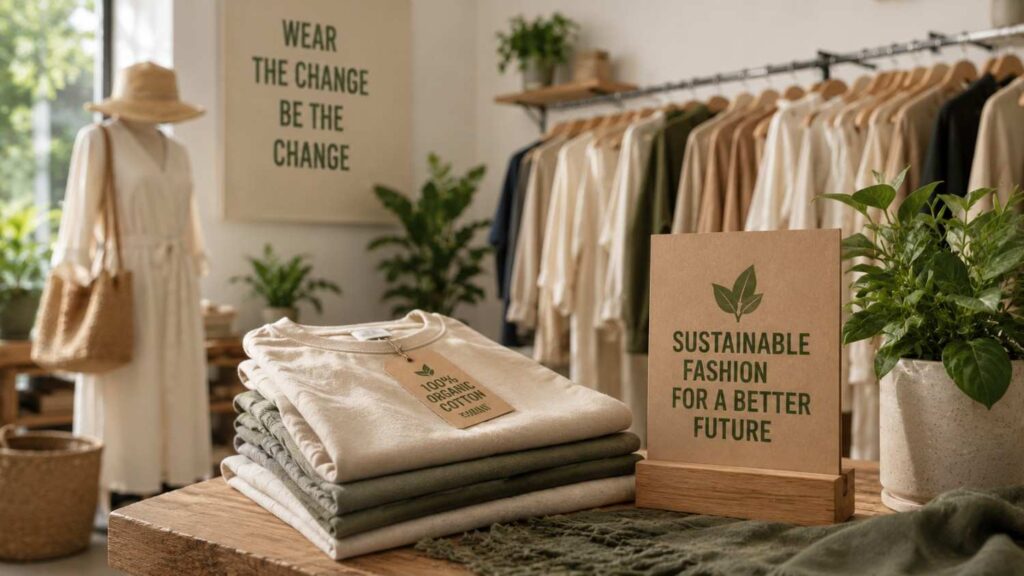
The Best Sustainable Fashion Brands for 2026: 10 Verified Picks
The best sustainable fashion brands for 2026 are not necessarily the companies making the loudest environmental claims. Stronger brands provide information that shoppers can evaluate, including certification details, supplier policies, fiber percentages, repair services, resale programs, measurable targets, and public impact reports.
This distinction matters because words such as “green,” “conscious,” “responsible,” and “planet-friendly” do not have one universal meaning. A company may promote recycled packaging while providing little information about garment workers, factory conditions, textile processing, or product durability. Another brand may use organic cotton but produce clothing that follows short-lived trends and is unlikely to remain useful for more than one season.
Fashion also has a substantial environmental footprint. The United Nations Environment Programme estimates that the fashion and textile sector contributes between 2% and 8% of global greenhouse gas emissions. It also reports that approximately 92 million tonnes of textile waste are generated globally each year. These figures show why material choices, production volumes, garment durability, and end-of-life systems all matter.
This guide evaluates ten ethical fashion brands using publicly available evidence. It does not suggest that any company has eliminated its impact. Instead, it identifies brands taking meaningful steps in areas such as certified materials, Fair Trade production, traceability, repairs, take-back programs, resale, and circular design.
The goal is to help you move beyond marketing language and compare the factors that influence whether a garment is likely to be a more responsible purchase.
What Makes a Fashion Brand Sustainable in 2026?
A sustainable fashion brand should address the full journey of a garment rather than focusing on one marketable feature. That journey begins with raw-material production and continues through spinning, dyeing, cutting, sewing, transportation, retail, customer use, repair, resale, and eventual disposal or recycling.
Environmental performance is only one part of the evaluation. Ethical fashion brands should also demonstrate how they protect workers, monitor suppliers, prevent forced labor, improve factory safety, and respond when problems are identified. A low-impact fiber cannot compensate for unsafe working conditions, just as a Fair Trade factory does not automatically make an environmentally damaging material sustainable.
Durability is equally important. A garment made with recycled or organic fibers may still perform poorly if the fabric pills quickly, seams fail, or the design becomes outdated after one season. Sustainable clothing should ideally remain functional, comfortable, repairable, and relevant for repeated use.
For readers who want to follow broader industry developments beyond individual brands, these sustainable fashion insights provide additional context on evolving sustainability practices and reporting standards.
Transparency connects all these areas. Credible sustainable clothing companies explain what they are doing, how progress is measured, which standards apply, and where limitations remain. They do not simply publish positive stories. They provide enough detail for customers, researchers, and industry organizations to question or verify their claims.
The following criteria offer a practical framework for evaluating whether a brand’s sustainability strategy is broad, measurable, and relevant to the products it sells.
Evidence Used to Evaluate Each Brand
Five areas provide a useful starting point when comparing the best sustainable clothing brands: materials, people, transparency, longevity, and circularity. None should be considered in isolation because strong performance in one area can hide weaknesses in another.
Materials include organic, recycled, regenerative, responsibly sourced, or lower-impact fibers. The evaluation should consider the exact percentage used, whether certification applies, and whether blended fabrics may create recycling difficulties. A garment described as “made with recycled material” could contain only a small recycled component, so product-level fiber information matters.
The people category covers wages, working hours, factory safety, worker representation, grievance systems, forced-labor protections, and independent monitoring. Transparency involves supplier lists, impact reports, certification scopes, methodologies, and progress against measurable targets.
Longevity considers construction quality, warranties, timeless design, care guidance, repair availability, and access to replacement components. Circularity examines what happens after use, including resale, rental, take-back, remanufacturing, donation, and fiber-to-fiber recycling.
A brand does not need to lead in every category, but it should provide enough evidence to show that sustainability is part of its operating model rather than a temporary advertising campaign.
Certifications Worth Checking
Independent certifications can help shoppers evaluate claims, but only when the scope of each certification is understood. A certification may apply to a material, factory, product, supply-chain stage, or entire company. Seeing a logo does not always mean every garment sold by the brand meets the same standard.
The Global Organic Textile Standard, commonly called GOTS, covers the processing of organic fibers and includes environmental and social requirements across multiple production stages. It is particularly relevant when evaluating organic cotton clothing brands because it provides more assurance than an unsupported organic claim.
Fair Trade USA standards address areas such as working conditions, forced and child labor, compensation, environmental protections, traceability, and worker-controlled community funds. Fair Wear focuses on labor conditions in garment supply chains and works with member brands to improve factory practices.
B Corp certification evaluates company-level performance in areas including governance, workers, community, customers, and the environment. It can provide useful context, although it does not guarantee that every individual product is environmentally preferable.
Certifications should therefore support research rather than replace it. I recommend checking the certification owner’s official database, identifying what the standard covers, and confirming whether it applies to the specific product being considered.
| Certification / Standard | Primary Focus | What It Verifies | Best For |
|---|---|---|---|
| GOTS (Global Organic Textile Standard) | Organic textiles | Organic fiber processing, environmental and social criteria | Organic cotton clothing |
| Fair Trade USA | Ethical production | Worker welfare, fair labor practices, environmental standards | Fair Trade clothing |
| Fair Wear Foundation | Labor conditions | Factory working conditions and continuous improvement | Ethical garment manufacturing |
| Certified B Corporation | Overall business impact | Governance, workers, environment, customers, and community | Responsible fashion companies |
| World Fair Trade Organization (WFTO) | Fair trade practices | Ethical sourcing, transparency, and producer partnerships | Fair Trade fashion brands |
Top Verified Sustainable Brands by Category
The following brands represent different approaches to sustainable fashion. Some focus on repair and durability, while others emphasize organic fibers, Fair Trade relationships, recycled materials, circular production, or transparent environmental measurements.
The list is organized by category because direct comparisons can otherwise become misleading. A technical outdoor jacket has different performance requirements from an organic cotton T-shirt or a fashion sneaker. Synthetic fibers may be difficult to avoid in waterproof or high-performance garments, while cotton basics can more easily use certified organic materials.
A brand’s position in this guide is based on publicly available evidence rather than popularity alone. That evidence includes official sustainability information, recognized certifications, material disclosures, repair services, resale programs, take-back systems, and long-term supplier initiatives.
Shoppers should still check individual product pages. Materials, certifications, production locations, and construction methods can vary between collections. A company may have strong overall policies while selling particular items that do not reflect its best environmental performance.
Availability also differs by region. Some brands operate primarily in North America or Europe, which may affect shipping costs, return emissions, duties, and access to repair services. Whenever possible, purchasing from a responsible brand with local distribution may be more practical than importing a similar product across long distances.
With those limitations in mind, the following ten companies offer some of the clearest and most useful examples of responsible fashion practices in 2026.
Outdoor Clothing, Casualwear, and Everyday Basics
Patagonia is the strongest overall outdoor clothing option in this guide. The company reported that 95% of its fiscal-year 2025 products were made in Fair Trade Certified factories. It also states that recycled polyester represented 94% of the polyester-based fabrics used by weight for Spring 2026. These figures are supported by wider programs focused on repairs, resale, product care, and material transparency.
tentree focuses on casual clothing made with materials such as organic cotton, hemp, recycled polyester, and TENCEL. Its business model also links purchases to tree planting. While planting trees does not cancel the environmental impact of manufacturing clothing, the company combines restoration projects with preferred-material targets and B Corp reporting.
Pact is particularly relevant for shoppers seeking organic cotton basics. Its collection includes underwear, sleepwear, T-shirts, leggings, and casual wardrobe essentials. Pact works with GOTS, Fair Trade USA, and other sustainability programs, and states that its cut-and-sew factories are Fair Trade Certified.
For all three brands, product-level checking remains important. Buyers should confirm fiber percentages, certification details, care requirements, and whether the garment is likely to receive enough use to justify a new purchase.
Denim and Circular Wardrobe Brands
Nudie Jeans is one of the strongest sustainable denim brands for shoppers who value repairability. The company uses certified organic cotton and provides free repairs for its jeans through its repair shop network. These locations also support resale, reuse, donation, and recycling, creating several possible pathways for garments that customers no longer wear.
MUD Jeans takes a more explicitly circular approach. The company accepts used jeans, resells wearable garments, and recycles material from worn-out denim into new products. It is a certified B Corp and has received the TESTEX Circularity Label, which assesses areas including durability, repairability, and recyclability. Some newer styles introduced in 2025 contain 55% post-consumer recycled cotton.
Eileen Fisher applies circular principles to timeless womenswear through its Renew program. Customers can return used Eileen Fisher clothing, which may then be cleaned and resold, remade into new designs, donated, or directed toward another responsible outcome. The company reports collecting more than two million garments since the program began in 2009.
These brands show that circular fashion involves more than using recycled fibers. A credible circular model also considers repair, collection logistics, resale quality, material recovery, and whether products were designed for extended use from the beginning.
Contemporary Fashion, Footwear, and Fair Trade Clothing
Reformation is a practical option for shoppers who want contemporary dresses, occasionwear, denim, and trend-aware clothing without relying entirely on conventional fashion retailers. Its RefScale system presents product-level estimates for carbon dioxide emissions, water use, and waste. These figures are calculated using the company’s methodology, so they should be interpreted as comparative information rather than universally verified measurements.
VEJA is a leading name among sustainable sneaker brands. The company uses materials including Brazilian and Peruvian organic cotton, Amazonian rubber, and selected recycled components. Its project website publishes information about sourcing, factories, chemicals, materials, and supply-chain challenges, providing more detail than a general eco-friendly footwear claim.
People Tree has a long-standing Fair Trade focus and works with producer groups using organic materials, traditional skills, and long-term partnerships. The brand states that it was the first international fashion company certified by the World Fair Trade Organization.
ARMEDANGELS offers minimalist European clothing made with materials such as organic cotton and recycled fibers. Its participation in Fair Wear and its published environmental and social responsibility information make it relevant for shoppers seeking modern wardrobe staples supported by recognized labor initiatives.
Related Articles
Sustainable Fashion Brand Comparison
A comparison table can make the differences between brands easier to understand, but it should not be used as a final purchasing decision on its own. Sustainability performance varies by product, collection, material, and manufacturing location. A brand may have an excellent repair program but limited information about wages, or strong organic-material credentials but no effective take-back system.
The most useful comparison therefore focuses on each company’s strongest evidence and its main limitation. This approach prevents the table from presenting sustainability as a simple score. It also helps readers choose a brand based on the category that matters most to them, whether that is durability, labor standards, circularity, organic cotton, or contemporary design.
Price is another important consideration, but lower cost should not automatically be treated as better value. Some products have a high initial price because they use certified materials, require more complex construction, or support additional worker and environmental programs. The more relevant question is whether the item offers good cost per wear and remains useful long enough to justify its production.
Similarly, a highly rated brand may not be the best choice when international shipping, limited sizing, difficult returns, or unavailable repair services reduce its practicality. The table below summarizes the leading strengths and considerations associated with each brand.
2026 Brand Comparison Table
| Brand | Best For | Strongest Evidence | Main Consideration |
|---|---|---|---|
| Patagonia | Outdoor clothing | Fair Trade production, recycled materials, repair, resale | Premium pricing and continued use of performance synthetics |
| tentree | Casualwear | B Corp certification, preferred materials, tree planting | Tree planting should not replace product-level evaluation |
| Pact | Everyday basics | Organic cotton focus, GOTS partnerships, Fair Trade factories | Limited formalwear and fashion-forward options |
| Nudie Jeans | Repairable denim | Certified organic cotton and free repairs | Product range remains strongly denim-focused |
| MUD Jeans | Circular denim | Take-back, resale, recycling, and circularity testing | Return logistics and availability vary by region |
| Eileen Fisher | Timeless womenswear | Established Renew take-back and resale program | Higher initial prices |
| Reformation | Dresses and occasionwear | Product-level RefScale impact estimates | Some styles remain influenced by fast-moving trends |
| VEJA | Sneakers | Organic cotton, Amazonian rubber, sourcing transparency | Not every component is natural, recycled, or biodegradable |
| People Tree | Fair Trade fashion | WFTO certification and producer partnerships | Availability differs outside Europe |
| ARMEDANGELS | European essentials | Fair Wear participation and preferred materials | International shipping may reduce accessibility |
This comparison shows why there is no single winner for every shopper. Each brand solves a different part of the sustainability challenge, and every option still involves trade-offs.
How to Interpret the Comparison
The table should be used as a research shortcut rather than a substitute for product-level checking. A company’s strongest sustainability program may not apply equally to every garment. For example, a brand may use certified organic cotton in one collection while another product contains a complex blend of virgin and recycled synthetic fibers.
Material blends deserve particular attention. Combining several fibers can improve stretch, durability, or comfort, but it may also make the garment difficult to recycle at the end of its life. Similarly, recycled polyester can reduce demand for virgin fossil-based material, yet it remains a synthetic fiber and may release microfibers during washing.
Social and environmental evidence should also be considered together. Organic cotton may reduce exposure to certain agricultural chemicals, but it does not automatically prove that garment workers receive fair wages. Fair Trade production may improve labor safeguards, but it does not guarantee that every material has a low carbon or water footprint.
The best choice is usually the garment that meets a real need, fits correctly, performs well, and includes credible information about materials and manufacturing. Durability, repairability, and expected wear should carry as much weight as a sustainability label.
How to Choose a Truly Sustainable Fashion Brand
Choosing a genuinely responsible fashion brand requires more than searching for a list of eco-friendly clothing companies. Sustainability claims appear throughout the market, but the level of evidence behind them varies significantly. Some companies publish detailed supplier information and measurable progress, while others depend on broad language that cannot be independently assessed.
The most reliable approach is to begin with the individual product. Check what the garment is made from, where it was manufactured, which certification applies, and whether the information is specific enough to be useful. A claim such as “made with sustainable materials” provides little value unless the brand identifies the materials and their percentages.
Next, consider the business model. A company that releases constant collections and encourages frequent replacement may conflict with slow-fashion principles even when some products use improved fibers. Production volume, design longevity, repair access, resale, and take-back systems all influence the total impact.
Advanced readers may also want to examine whether the brand publishes supplier lists, climate targets, progress updates, wage information, chemical-management policies, and clear explanations of its methodology. Beginners can start with recognized certifications and product-level material details before moving into more technical reports.
The following process provides a repeatable way to compare brands without depending entirely on rankings or marketing campaigns.
Follow This Five-Step Verification Process
Step 1: Review the product page. Look for complete fiber percentages, certification details, production location, care instructions, and information about trims or linings. Avoid assuming that a company-wide claim applies to every item.
Step 2: Identify who verifies the claim. Check whether the evidence comes from GOTS, Fair Trade USA, Fair Wear, B Lab, the World Fair Trade Organization, or another independent body. Visit the certifier’s website when possible to confirm the scope.
Step 3: Examine supply-chain transparency. Stronger brands name suppliers, publish factory lists, explain monitoring systems, and describe how complaints or violations are handled. Transparency does not mean the supply chain is perfect, but it makes accountability more possible.
Step 4: Evaluate durability and aftercare. Look for repair services, spare parts, warranties, care guidance, resale, and take-back options. A garment designed for long use usually offers more value than one dependent on a short trend cycle.
Step 5: estimate expected wear. Consider fit, versatility, maintenance, climate, and lifestyle. If an item is unlikely to be worn frequently, its sustainability credentials do not make the purchase necessary.
| Buying Factor | What to Check | Why It Matters |
|---|---|---|
| Materials | Organic, recycled, or responsibly sourced fibers | Reduces environmental impact |
| Labor Standards | Fair Trade, Fair Wear, or similar certifications | Supports ethical working conditions |
| Transparency | Supplier lists and sustainability reports | Shows accountability and traceability |
| Product Durability | Repair options, warranties, quality construction | Extends garment lifespan |
| Circular Programs | Take-back, resale, or recycling initiatives | Reduces textile waste and supports circular fashion |
Watch for Fashion Greenwashing Red Flags
Greenwashing occurs when environmental marketing creates a stronger impression of responsibility than the available evidence supports. One common warning sign is the use of undefined words such as “green,” “clean,” “conscious,” or “earth-friendly.” These terms may sound positive, but they reveal little without measurable criteria.
Another red flag is selective reporting. A large retailer may promote one small recycled collection while providing limited information about the environmental and labor conditions associated with most of its inventory. Packaging improvements can also distract from more significant issues such as fiber production, dyeing, factory energy, wages, or excessive production volume.
Be cautious when a brand depends heavily on carbon offsets without showing how it is reducing direct emissions. Distant targets should also be supported by annual progress reports, clear baseline years, and transparent methodologies.
Understanding how fashion supply chains operate can also make it easier to recognize unsupported sustainability claims and distinguish meaningful transparency from marketing language.
Certification logos require verification. Determine whether a standard applies to the entire company, one factory, a particular fiber, or only selected products. Responsible brands usually explain these boundaries.
Credible sustainability communication includes limitations and unresolved challenges. A company that openly discusses weak areas may be more trustworthy than one that presents every product as harmless, climate-positive, or completely circular.
How to Shop Sustainable Fashion on a Budget
Sustainable fashion is often associated with premium pricing, but responsible shopping does not require replacing an entire wardrobe with expensive new clothing. In many cases, the most sustainable and affordable approach is to use what you already own for longer.
Begin by identifying actual wardrobe gaps. Many unnecessary purchases happen because shoppers focus on individual products rather than complete outfits. A shirt may appear useful in isolation but remain unworn because it does not work with existing trousers, shoes, or outerwear. Planning purchases around real combinations reduces this problem.
Secondhand shopping can provide access to durable clothing from both conventional and ethical fashion brands at lower prices. Resale platforms, charity shops, consignment stores, clothing swaps, and brand-operated resale programs all extend the life of existing garments. The environmental benefit comes from keeping products in circulation and delaying the need for additional manufacturing.
Repairs are equally important. Replacing buttons, fixing seams, patching denim, adjusting hems, and professionally resoling shoes can cost far less than purchasing new items. Proper washing, drying, and storage also help prevent premature damage.
When a new purchase is necessary, prioritize garments that fit well, work across several outfits, and are likely to remain useful for years. Cost per wear provides a more practical measure of value than the initial price alone.
Prioritize Cost per Wear
Cost per wear is calculated by dividing the price of a garment by the number of times it is used. A $120 jacket worn 120 times costs approximately $1 per wear. A $30 trend item worn three times costs $10 per wear, even though it appeared more affordable at checkout.
The calculation is not a perfect environmental measurement, but it encourages shoppers to think about long-term usefulness. Before purchasing, consider whether the garment suits your climate, work environment, lifestyle, laundry routine, and existing wardrobe. A delicate item requiring specialist cleaning may receive less use than a machine-washable alternative.
Fit is especially important. Clothing that feels uncomfortable, requires constant adjustment, or works only with one outfit is unlikely to achieve a low cost per wear. When possible, read size information carefully, check return policies, and avoid keeping an item simply because returning it is inconvenient.
I recommend asking five questions: Can I create at least three outfits with it? Will I wear it next year? Can it be repaired? Is it easy to care for? Is a secondhand version available?
These questions reduce impulsive purchases and help turn affordable sustainable fashion into a practical wardrobe strategy.
Use Resale, Repair, and Take-Back Programs
Resale and repair programs extend the useful life of clothing, which can reduce the need to manufacture replacement products. Buying a secondhand garment does not erase its original impact, but it distributes that impact across a longer period of use and keeps the item out of the waste stream.
Brand-operated programs can simplify this process. Patagonia’s Worn Wear model supports repairs and the resale of used products. Nudie Jeans offers free jean repairs through its repair network. Eileen Fisher’s Renew program accepts used garments for resale, remaking, donation, or other responsible outcomes. MUD Jeans combines take-back with resale and material recycling.
Before using a take-back scheme, check what actually happens to returned clothing. Some programs resell wearable items, while others downcycle material into insulation or cleaning cloths. Fiber-to-fiber recycling is still more technically challenging than many marketing campaigns suggest, particularly for blended fabrics.
Local repair services may sometimes be the better option. A neighborhood tailor, cobbler, or alterations specialist can preserve an item without the shipping required by a brand program.
The goal is not simply to return clothing. It is to keep each garment at its highest possible value for as long as practical.
Quick Answer About the Best Sustainable Fashion Brands for 2026
The best sustainable fashion brands for 2026 include Patagonia, Nudie Jeans, MUD Jeans, Eileen Fisher, Reformation, VEJA, tentree, Pact, People Tree, and ARMEDANGELS. These companies stand out because they provide more evidence than a basic environmental slogan. Their approaches include certified organic materials, recycled fibers, Fair Trade production, factory monitoring, product repair, resale, take-back services, and garment recycling.
No clothing company is completely impact-free. Every new garment requires raw materials, manufacturing, transportation, packaging, and energy. A responsible shopper should therefore compare individual products rather than assuming that every item from a well-known sustainable brand has the same environmental or social performance.
The most suitable choice also depends on the category. Patagonia is a strong overall option for outdoor clothing and repairability. Nudie Jeans and MUD Jeans lead in sustainable denim. VEJA is a notable choice for footwear, while Pact specializes in organic basics. People Tree is particularly relevant for shoppers prioritizing Fair Trade principles.
The best purchase is ultimately one that meets a genuine need, fits well, remains useful for years, and comes with credible information about how it was made.
Best Overall Option
Patagonia is the strongest overall choice in this comparison because its sustainability strategy covers several important parts of the clothing lifecycle. The company uses recycled and preferred materials across a large portion of its product range, works with Fair Trade Certified factories, provides detailed environmental information, and encourages customers to repair clothing rather than replace it immediately.
Its Worn Wear program is particularly important because it connects sustainability with product longevity. A jacket made with improved materials still creates an environmental impact during production. Repairing that jacket and keeping it in use for many years can reduce the need for additional purchases. Patagonia also provides repair guidance and supports the resale of used garments, helping extend the functional life of its products.
However, Patagonia should not be treated as perfect or universally suitable. Its prices are relatively high, and some technical outdoor products still require synthetic materials for durability and weather performance. The brand is best viewed as a strong option for shoppers who need functional outdoor clothing and plan to use each item frequently over a long period.
Best Options by Category
Different shoppers need different products, which is why a category-based approach is more useful than naming one universal winner. For denim, Nudie Jeans is a strong choice for organic cotton jeans supported by free repairs, while MUD Jeans focuses more directly on circular production, garment take-back, resale, and recycled cotton.
For everyday basics, Pact offers underwear, sleepwear, T-shirts, and casual clothing made with organic cotton and supported by recognized certification partnerships. People Tree is better suited to shoppers who want Fair Trade-focused clothing and greater attention to traditional production skills and long-term supplier relationships.
VEJA is one of the most recognized options for lower-impact sneakers because it provides information about organic cotton, Amazonian rubber, recycled materials, and supply-chain sourcing. Reformation is a stronger choice for dresses, occasionwear, and trend-aware contemporary clothing, while Eileen Fisher suits shoppers looking for understated, timeless womenswear supported by a long-running take-back program.
The best option therefore depends on the garment category, available evidence, fit, price, shipping location, and how often the buyer expects to wear the product.
Frequently Asked Questions
Questions about sustainable fashion rarely have one universal answer because brands use different materials, certifications, manufacturing systems, and circular programs. A company may perform well in environmental reporting but provide limited information about wages. Another may have strong Fair Trade relationships but offer fewer options for repair or resale.
Consumers should therefore avoid treating sustainability as a fixed label. It is better understood as a collection of measurable practices that can improve or weaken over time. Product-level details, certification scope, regional availability, and intended use all influence whether a particular purchase is responsible.
The following questions reflect common search intent among people comparing the best sustainable fashion brands for 2026. The answers focus on practical decision-making rather than presenting any company as completely ethical or environmentally harmless.
For beginners, the most important principle is to purchase less frequently and demand clearer evidence. For advanced shoppers, useful research areas include supplier lists, fiber traceability, chemical management, living-wage progress, repair infrastructure, recycled-content methodology, and end-of-life systems.
Sustainable fashion is also not limited to buying from specialist brands. Wearing existing clothing, choosing secondhand items, maintaining garments carefully, and repairing damage can be as important as selecting a new certified product. These actions reduce unnecessary demand while helping shoppers build wardrobes that are more durable, functional, and financially manageable.
What are the best sustainable fashion brands for 2026?
The best sustainable fashion brands for 2026 include Patagonia, Nudie Jeans, MUD Jeans, Eileen Fisher, VEJA, Reformation, tentree, Pact, People Tree, and ARMEDANGELS. Each brand has a different strength, so the most suitable choice depends on the product category and the buyer’s priorities.
Patagonia combines recycled and preferred materials with Fair Trade production, repair services, resale, and detailed reporting. Nudie Jeans and MUD Jeans are strong choices for sustainable denim, particularly when repairability and circular systems matter. VEJA provides greater transparency than many conventional sneaker companies, while Pact focuses on organic cotton basics.
People Tree is particularly relevant for shoppers seeking Fair Trade clothing and long-term producer relationships. Eileen Fisher offers understated womenswear supported by a mature take-back program, and Reformation provides contemporary styles with product-level environmental estimates.
No brand should be accepted without further checking. Review the exact garment’s fiber content, certification, manufacturing details, durability, and expected use before buying.
What is the most sustainable fashion brand?
There is no objectively “most sustainable” fashion company because sustainability involves multiple environmental and social factors that cannot be reduced to one universal score. Materials, emissions, wages, chemicals, durability, repairability, production volume, shipping, and end-of-life systems may produce different results.
Patagonia is one of the strongest overall options because it combines improved materials, Fair Trade production, product repairs, used-item resale, and substantial public reporting. However, it may not lead every category. MUD Jeans has a more focused circular model for denim, while People Tree places greater emphasis on Fair Trade relationships and traditional production skills.
The most sustainable choice may also be an item already in your wardrobe. Continuing to wear, repair, or alter an existing garment usually avoids the immediate manufacturing impact of purchasing something new.
When a new item is necessary, the best brand is the one offering a suitable, durable product with strong evidence in the areas most relevant to that garment.
Is sustainable fashion always expensive?
Sustainable fashion is not always expensive, although responsibly produced new clothing often costs more than ultra-low-priced fast fashion. Higher prices can reflect certified fibers, smaller production volumes, stronger factory standards, better construction, repair services, and more transparent supply chains.
The purchase price does not reveal the full cost. A durable $100 garment worn 100 times may offer better value than a $20 item worn only twice. Cost per wear helps shoppers compare long-term usefulness rather than focusing only on the amount paid at checkout.
Affordable alternatives include buying secondhand, using resale platforms, attending clothing swaps, shopping seasonal sales, repairing existing garments, and choosing versatile pieces that work across several outfits. Some sustainable brands also sell used products through their own resale programs.
A responsible wardrobe does not need to be replaced all at once. Gradual purchasing based on genuine need is usually more sustainable and financially realistic than attempting an immediate ethical-fashion makeover.
Which sustainable clothing certifications are reliable?
Reliable clothing certifications include GOTS, Fair Trade standards, Fair Wear participation, World Fair Trade Organization certification, and certain company-level assessments such as B Corp certification. Each standard evaluates different issues, so understanding its scope is essential.
GOTS is particularly relevant to organic textiles because it addresses fiber processing and includes environmental and social criteria. Fair Trade standards cover defined labor, sourcing, traceability, and environmental requirements. Fair Wear works with garment brands to improve factory labor conditions and monitor progress.
B Corp certification evaluates broader company performance across governance, workers, community, customers, and environmental practices. It can provide useful company-level context but does not mean every product has the same environmental impact.
Always confirm whether a certification applies to an individual garment, a material, a manufacturing facility, a product line, or the entire company. The certification organization’s official database is generally more reliable than a logo displayed without explanation on a retailer’s product page.
Is organic cotton clothing automatically ethical?
Organic cotton clothing is not automatically ethical. Organic certification generally addresses how cotton is grown and which agricultural inputs are restricted, but it does not necessarily prove that every worker involved in ginning, spinning, dyeing, cutting, or sewing receives fair wages and safe conditions.
The processing stage also matters. Cotton may be organically grown but dyed or finished using resource-intensive methods. Additional standards such as GOTS can provide broader assurance because they address several textile-processing requirements rather than only the raw agricultural fiber.
Durability should also be considered. An organic cotton garment that loses its shape or develops holes quickly may provide less long-term value than a well-constructed alternative designed for repeated use.
When evaluating organic cotton clothing brands, look for complete fiber percentages, certification details, factory information, labor policies, chemical-management practices, and care guidance. Organic cotton can be an important improvement, but it should be treated as one part of a wider sustainability assessment rather than a complete ethical guarantee.
Is buying secondhand better than buying new sustainable clothing?
Buying secondhand is often the preferred option because it extends the life of an existing garment and avoids the immediate need to manufacture another product. It can also make durable, high-quality clothing more affordable and reduce the amount of material entering disposal or recycling systems.
However, secondhand is not always practical. The required size, condition, technical performance, safety feature, or hygiene standard may be unavailable. Outdoor equipment, workwear, undergarments, and specialized clothing may sometimes need to be purchased new.
A useful hierarchy is to wear what you already own, repair or alter it when possible, search secondhand options, and then consider a carefully selected new product. When purchasing new, choose a garment with credible material and labor evidence, suitable construction, repair potential, and a high expected number of wears.
The goal is not to follow one rigid rule. It is to reduce unnecessary production while ensuring that the clothing purchased remains genuinely useful.
How can I tell whether a fashion brand is greenwashing?
Start by looking for measurable information. A credible brand should identify materials, percentages, certification scopes, suppliers, targets, progress, and the methodology used to calculate environmental claims. Undefined terms such as “eco-conscious” or “responsibly made” provide little evidence on their own.
Check whether the company discusses its entire business or only promotes one small collection. A limited recycled capsule does not necessarily represent the impact of the wider product range. Review production frequency, trend cycles, repair services, take-back systems, and whether annual progress is published.
Be cautious with claims such as “carbon neutral,” “climate positive,” or “zero impact” when the company relies heavily on offsets or does not explain its calculations. Sustainability claims should acknowledge manufacturing impacts rather than suggesting that new clothing is harmless.
Finally, verify certification logos through the issuing organization. Transparent brands explain what remains unresolved and where progress is incomplete. Honest limitations are generally more credible than perfect-sounding environmental promises.
Conclusion
The brands featured in this guide demonstrate that sustainable fashion can take several different forms. Patagonia emphasizes durability, repairs, resale, and preferred materials. Nudie Jeans and MUD Jeans show how denim can be supported through organic cotton, repair services, take-back systems, and recycled content. Eileen Fisher applies circular principles to timeless womenswear, while VEJA provides greater visibility into sneaker materials and sourcing.
People Tree focuses on Fair Trade relationships and producer partnerships. Pact offers accessible organic cotton basics, tentree combines preferred materials with restoration initiatives, ARMEDANGELS provides modern European essentials, and Reformation offers product-level environmental estimates for contemporary clothing.
None of these approaches removes every environmental or social impact. New garments still require materials, labor, energy, transportation, and packaging. That is why the best sustainable fashion brands for 2026 should be viewed as comparatively better options rather than perfect solutions.
Responsible shopping begins before choosing a brand. Review the wardrobe you already own, identify genuine gaps, consider secondhand options, and evaluate how frequently a new garment will be worn. When a purchase is necessary, prioritize evidence, fit, quality, versatility, repairability, and long-term usefulness.
Sustainable fashion becomes more meaningful when responsible production is combined with responsible consumption. Buying less, caring for clothing properly, repairing damage, and keeping garments in use can have as much practical importance as selecting certified materials.
Best Overall Recommendation
Patagonia remains the strongest overall recommendation because it addresses several important areas at the same time. Its approach includes Fair Trade Certified production, increased use of recycled materials, product repair, used-clothing resale, care guidance, and public environmental reporting.
The company’s strongest advantage is that it connects sustainability with durability. Technical clothing often carries a significant manufacturing footprint because it requires specialized fabrics, coatings, trims, and construction. Keeping a jacket, fleece, or outdoor layer in use for many years can therefore be more valuable than replacing it whenever a new version is released.
Patagonia is not the best choice for every category or budget. Its prices are relatively high, and some products rely on synthetic performance materials. Shoppers seeking denim may find stronger circular options from MUD Jeans or repair support from Nudie Jeans. People Tree may be more suitable for Fair Trade-focused fashion, while Pact is more practical for organic cotton basics.
The overall recommendation should therefore be used as a starting point. The final decision should be based on the specific garment, its evidence, and the buyer’s expected use.
Next Step
Before purchasing from any brand in this guide, begin with a wardrobe review. Identify the exact garment that is missing and determine why it is needed. This prevents a general interest in sustainable fashion from becoming another reason to buy unnecessary clothing.
Next, establish practical requirements such as size, fit, climate, color, care method, durability, and budget. Search secondhand marketplaces and local resale stores before comparing new alternatives. If a suitable used item is unavailable, review the product pages of two or three responsible brands.
Compare complete fiber percentages, certifications, production information, care instructions, repair options, return policies, and shipping location. Consider whether the garment can work with at least three existing outfits and whether you realistically expect to wear it for several years.
After purchasing, follow the care instructions, wash only when necessary, avoid excessive heat, repair minor damage early, and store the garment correctly. Sustainability does not end at checkout. The way clothing is used and maintained strongly influences its lifespan.